





What's Happening?
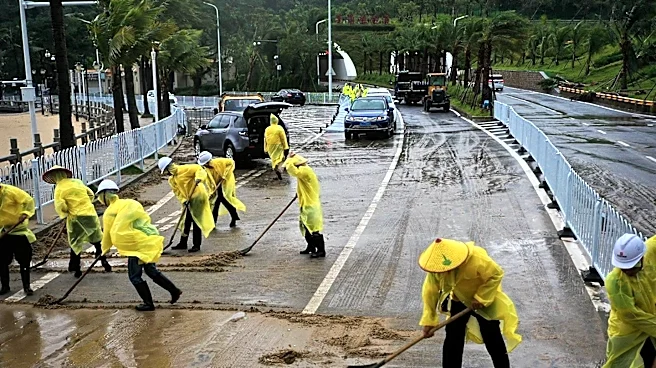
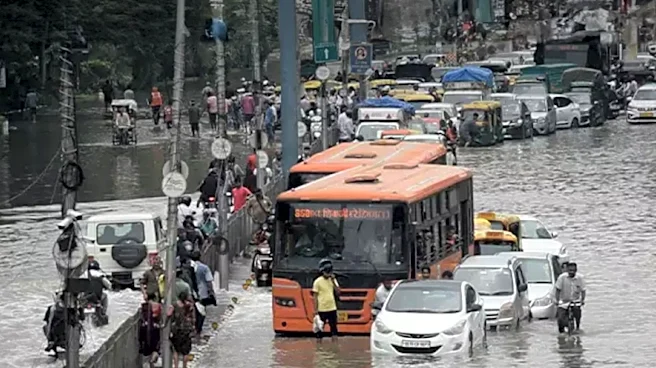
Central Vietnam, specifically the area from Thanh Hoa to Hue, Da Nang, and the eastern provinces from Quang Ngai to Dak Lak, is bracing for widespread heavy rainfall between November 9 and 12. This weather event could lead to flooding, flash floods, and landslides.
Coastal localities from Quang Ninh to Lam Dong are instructed to monitor wind forecasts and warnings at sea, and to guide ship owners and captains in taking preventive measures. In Northern Vietnam, authorities are implementing plans to address cold weather, protect public health, and safeguard livestock and agricultural production. The Ministry of Foreign Affairs Spokesperson Pham Thu Hang stated that Vietnamese authorities are assessing risks and developing appropriate measures, focusing on raising awareness and guiding citizens to proactively prepare for incidents without causing panic. This proactive approach emphasizes self-reliance for households during initial disruptions to essential services.
Why It's Important?
The anticipated heavy rainfall and potential natural disasters in Vietnam highlight the critical need for robust disaster preparedness and response mechanisms. For the U.S., this situation underscores the broader global challenges posed by extreme weather events, which can disrupt international supply chains and impact trade, particularly with countries like Vietnam that are significant manufacturing hubs. The emphasis on household self-reliance and proactive measures by Vietnamese authorities could serve as a model for other nations facing similar climate-related threats. Disruptions in Vietnam could affect U.S. businesses that rely on Vietnamese manufacturing and exports, potentially leading to delays and increased costs. The coordinated effort to mitigate risks and prevent panic is crucial for maintaining social stability and economic continuity in the affected regions.
What's Next?
Vietnamese authorities will continue to monitor weather forecasts and issue warnings, guiding coastal localities and residents to take necessary precautions. Efforts will focus on reviewing high-risk areas for deep flooding, flash floods, and landslides, and proactively evacuating people to safe locations. Hydroelectric and irrigation reservoirs will be operated according to regulations to manage water levels. In Northern Vietnam, plans to protect public health from cold weather and prevent gas poisoning from heating methods will be reinforced. The Ministry of Foreign Affairs will continue to coordinate risk assessments and implement measures to prevent incidents and avoid public panic. The long-term strategy involves shifting from passive response to proactive prevention, forecasting, and preparedness, linking cybersecurity with the protection of essential economic activities and people's lives.
Beyond the Headlines
This situation reflects a growing global trend of increased frequency and intensity of extreme weather events, necessitating a re-evaluation of national and international disaster preparedness strategies. The Vietnamese government's focus on enhancing household self-reliance for the initial 72 hours of an emergency, drawing from international best practices, signifies a shift towards a more resilient societal approach. This model, which encourages citizens to prepare basic necessities, could reduce the burden on government resources during the immediate aftermath of a disaster. Furthermore, the integration of cybersecurity with disaster response highlights the interconnectedness of modern infrastructure and the potential for cascading failures during crises. The development of sustainable logistics and renewable energy solutions, as seen in other related initiatives in Vietnam, could also play a role in building long-term resilience against climate impacts.