







What's Happening?
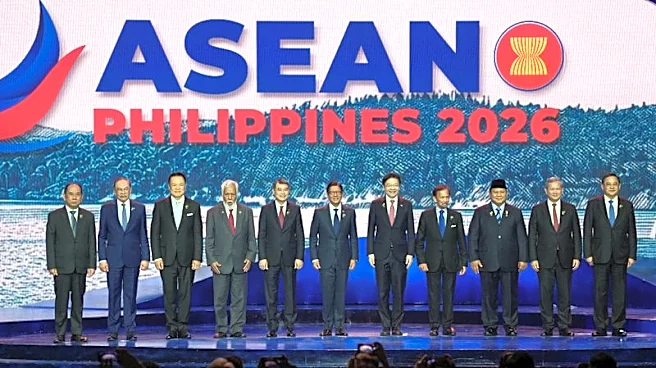
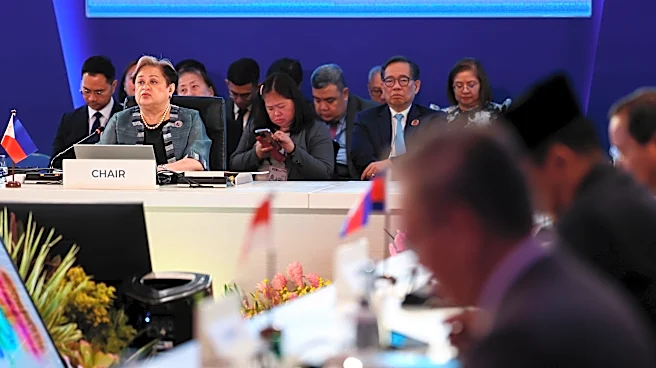
Southeast Asian leaders have adopted a contingency plan to mitigate the impact of the ongoing conflict in the Middle East, particularly the Iran war, on their economies and populations. The plan, discussed at the ASEAN summit in Cebu, Philippines, includes
establishing a regional fuel reserve, diversifying crude oil sources, and promoting electric vehicles. The Philippines, heavily affected by fuel price spikes, hosted the summit, which was stripped of traditional pomp due to economic challenges. The leaders also addressed the need for coordinated emergency fuel sharing and a regional power grid, though these measures are complex and may take time to implement.
Why It's Important?
The Iran war has highlighted the vulnerability of Southeast Asian economies to external shocks, particularly in energy supply. The region's reliance on Middle Eastern oil makes it susceptible to price fluctuations and supply disruptions. The crisis plan aims to enhance energy security and reduce dependency on volatile sources. Additionally, the conflict poses risks to the safety of Southeast Asian nationals working in the Middle East, necessitating coordinated evacuation plans. The situation underscores the importance of regional cooperation in addressing global challenges and the need for sustainable energy solutions.
What's Next?
ASEAN leaders will continue to work on implementing the crisis plan, with a focus on establishing a regional fuel stockpile and power grid. These efforts will require significant coordination and investment. The leaders also called for extending the ceasefire between the U.S. and Iran to ensure safe passage through the Strait of Hormuz. The ongoing conflict will likely remain a key topic in future ASEAN discussions, as the region seeks to strengthen its resilience against external economic and geopolitical pressures.