
What's Happening?
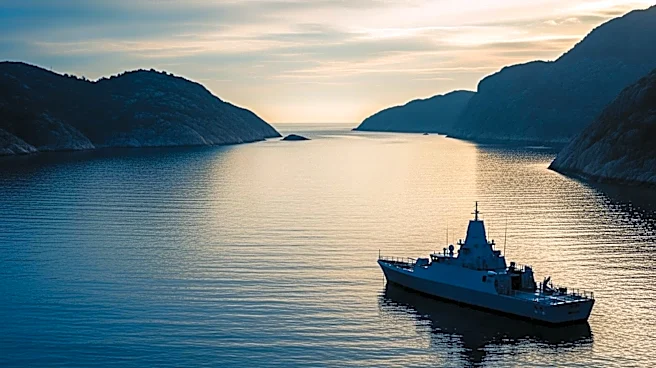
The Thai shipping company Precious Shipping has reported the discovery of human remains aboard its vessel, the Mayuree Naree, which was attacked near the Strait of Hormuz over three weeks ago. The attack,
attributed to Iranian forces, resulted in the ship being set ablaze and abandoned. Initially, three crew members were reported missing, and it was feared they were trapped in the engine room during the attack. The Royal Omani Navy had previously rescued 20 crew members who abandoned the ship. The Mayuree Naree was one of several commercial ships targeted in the region, with a total of 22 merchant ships reportedly struck in the Persian Gulf over the past month. The incident highlights the ongoing maritime conflict in the area, which has seen multiple attacks on vessels, raising significant safety concerns for seafarers.
Why It's Important?
The discovery of human remains on the Mayuree Naree underscores the severe risks faced by maritime workers in conflict zones, particularly in the Persian Gulf. This region is a critical artery for global trade, and disruptions here can have far-reaching economic impacts. The attacks not only threaten the safety of seafarers but also jeopardize the stability of international shipping routes. The International Maritime Organization and labor organizations have called for increased protection and repatriation efforts for seafarers, emphasizing their essential role in global commerce. The ongoing conflict could lead to heightened insurance costs, rerouting of ships, and increased shipping delays, affecting supply chains worldwide.
What's Next?
In response to the escalating maritime threats, international bodies and shipping companies may push for enhanced security measures in the Persian Gulf. This could involve increased naval patrols and diplomatic efforts to de-escalate tensions in the region. Shipping companies might also consider rerouting vessels to avoid high-risk areas, although this could lead to longer transit times and higher operational costs. The situation may prompt further discussions at international forums to address the safety of maritime workers and the protection of global trade routes.
Beyond the Headlines
The attacks in the Persian Gulf highlight the broader geopolitical tensions in the region, particularly involving Iran. These incidents could exacerbate existing diplomatic strains and impact negotiations on broader security and trade agreements. The safety of seafarers is not just a humanitarian concern but also a critical factor in maintaining the flow of global trade. The situation calls for a reevaluation of maritime security protocols and international cooperation to ensure the safety of shipping lanes.