






What's Happening?
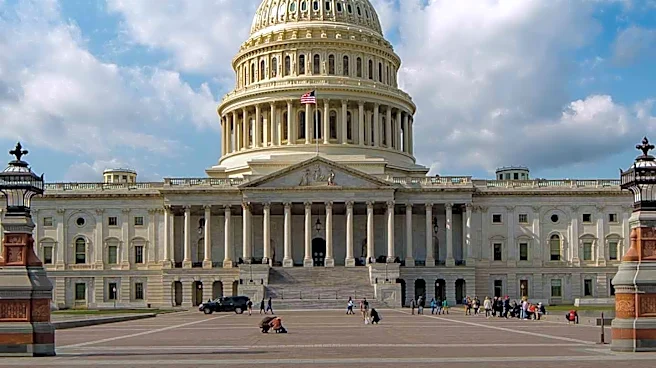
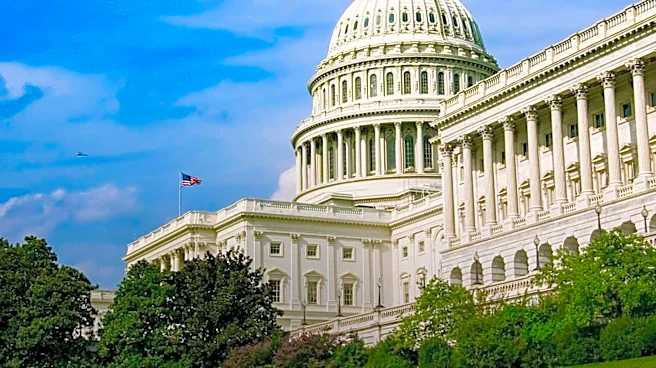
The Senate is reviewing a bill that would prohibit federal officials, including presidents, from issuing or sponsoring cryptocurrencies and other digital assets. This legislation, known as the Clarity Act, was reintroduced by Republicans and includes
provisions to prevent President Trump from profiting from crypto ventures. The bill proposes that the Department of Justice enforce the ban, with potential fines of up to $250,000 per day for violations. President Trump reportedly earned $1.2 billion from crypto-related activities during his current term, with significant income linked to World Liberty Financial, a company associated with his family. The bill faces challenges in securing the necessary 60 votes in the Senate, with some Democrats opposing the current ethics provisions.
Why It's Important?
The proposed legislation could significantly impact the regulation of digital assets in the U.S., aiming to prevent conflicts of interest among federal officials. If passed, it would establish a precedent for how government officials can engage with emerging financial technologies. The bill's progress is crucial for stakeholders in the cryptocurrency market, as it could influence regulatory frameworks and market dynamics. The banking industry has expressed concerns about the bill's implications for local lending and economic activity. The outcome of this legislative effort could shape the future of digital asset governance and ethical standards for public officials.
What's Next?
The Senate is expected to vote on the measure in the coming weeks, as indicated by Senate Majority Leader John Thune. The bill's passage will depend on bipartisan support, which is currently uncertain due to disagreements over the enforcement of ethics provisions. Companies in the cryptocurrency sector, such as Coinbase and Ripple, are advocating for a national regulatory framework, while the banking industry remains cautious. The outcome of this legislative process will be closely watched by industry players and policymakers, as it could set a new standard for digital asset regulation in the U.S.