






What's Happening?
Gov. Josh Green, who serves as chair of the Western Governors’ Association (WGA) and is a member of the National Governors Association (NGA) Executive Committee, will travel to New Mexico and Utah from November 14–20, 2026, for a series of conferences.
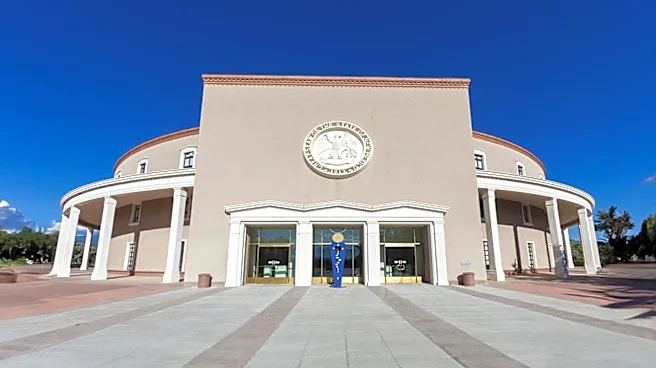
In Santa Fe, New Mexico, Governor Green is scheduled to participate in a workshop focused on his WGA chair’s initiative, 'Health Beyond Healthcare.' Following this, he will travel to Park City, Utah, to attend the New Governors Conference. At this event, Governor Green will act as a faculty governor, mentoring incoming governors and their teams to help them prepare for their new roles. His Chief of Staff, Brooke Wilson, will also attend the Utah conference, participating in a panel that advises incoming chiefs of staff and senior staff on establishing a governor’s office and cabinet. During Governor Green's absence, Acting Lt. Gov. Keith Regan will assume the role of acting governor. The Governor’s Office has coordinated with cabinet agencies and emergency management leadership to ensure continuous government operations and statewide readiness.
Why It's Important?
Governor Green's participation in these high-level conferences underscores the importance of inter-state collaboration and knowledge sharing among U.S. governors. His role as WGA chair and NGA Executive Committee member positions him as a key figure in shaping regional and national policy discussions, particularly in healthcare through his 'Health Beyond Healthcare' initiative. This initiative aims to explore innovative approaches to health beyond traditional medical services, potentially influencing public health strategies across western states. Furthermore, his mentorship at the New Governors Conference is crucial for ensuring a smooth transition of power and effective governance for newly elected state leaders. By sharing insights from his nearly eight years in Hawaii’s executive branch, Governor Green can help new governors navigate complex challenges, which could lead to more stable and efficient state administrations nationwide. These interactions also provide opportunities for Hawaii to learn from other states' experiences, particularly in areas like disaster preparedness and access to care, which are critical for the state's resilience.
What's Next?
Upon his return on November 20, 2026, Governor Green is expected to bring back insights and strategies from the conferences that could influence Hawaii's policy agenda, particularly in healthcare and disaster management. The 'Health Beyond Healthcare' initiative workshop in Santa Fe may lead to new policy recommendations or pilot programs that could be implemented in Hawaii or other WGA member states. The mentorship provided at the New Governors Conference could foster stronger relationships between Hawaii and other state administrations, potentially leading to future collaborative efforts on shared challenges. The discussions on disaster preparedness and improving access to care are likely to inform ongoing efforts in Hawaii to enhance its resilience and healthcare infrastructure. The continued coordination by the Governor’s Office during his absence ensures that state operations will proceed without interruption, maintaining stability and readiness for any unforeseen events.
Beyond the Headlines
Governor Green's engagement in these national forums highlights a broader trend of governors playing an increasingly significant role in addressing complex issues that transcend state borders. The 'Health Beyond Healthcare' initiative reflects a growing recognition that societal factors beyond clinical care, such as social determinants of health, significantly impact public well-being. This holistic approach could lead to more integrated and community-focused health policies, potentially shifting the paradigm of healthcare delivery in the U.S. The emphasis on mentoring new governors also points to the informal yet critical networks that shape American federalism, where experienced leaders guide the next generation, fostering a continuity of governance best practices. Such interactions can also subtly influence national policy debates by building consensus among state leaders on key issues, thereby creating a more unified voice from the states to the federal government. This collaborative spirit is essential for tackling challenges that require coordinated efforts across multiple jurisdictions.