



What's Happening?
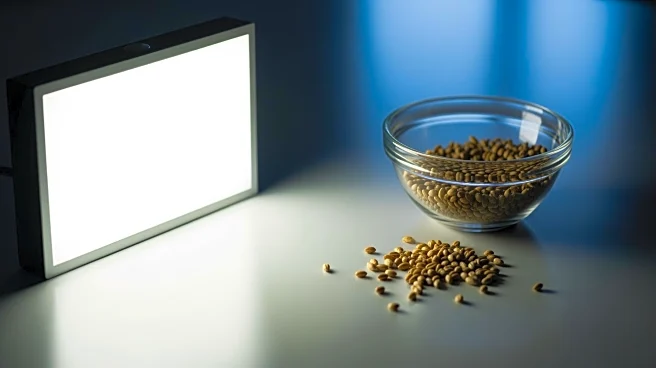
A recent study has demonstrated that exposure to bright light can suppress feeding and weight gain in mice. The research, conducted on both male and female mice, involved exposing them to varying intensities of light, ranging from 0 to 5,000 lux. The findings
revealed that mice exposed to bright light (3,000 lux) consumed less food compared to those under room light conditions (200 lux). The study also noted significant differences in food intake and body weight changes, particularly in female mice, when exposed to higher light intensities. The research highlights a visual circuit linked to the lateral hypothalamus as a potential mechanism through which bright light influences feeding behavior and metabolism.
Why It's Important?
This study is significant as it provides insights into how environmental factors, such as light exposure, can influence metabolic processes and feeding behavior. Understanding these mechanisms could have implications for addressing obesity and metabolic disorders in humans. The research suggests that manipulating light exposure could be a potential strategy for regulating food intake and body weight. This could lead to new interventions or therapies aimed at controlling weight gain and improving metabolic health, particularly in environments where natural light exposure is limited.
What's Next?
Further research is needed to explore the applicability of these findings to humans and to understand the underlying biological mechanisms in greater detail. Future studies could investigate the impact of bright light exposure on human metabolism and its potential as a non-invasive intervention for weight management. Additionally, exploring the role of the lateral hypothalamus in mediating these effects could provide deeper insights into the neural pathways involved in feeding behavior.
Beyond the Headlines
The study opens up discussions on the broader implications of light exposure on health and well-being. It raises questions about the impact of artificial lighting in modern environments and its potential effects on human metabolism and circadian rhythms. This research could contribute to the development of guidelines for optimal light exposure in workplaces and homes to promote better health outcomes.