







What's Happening?
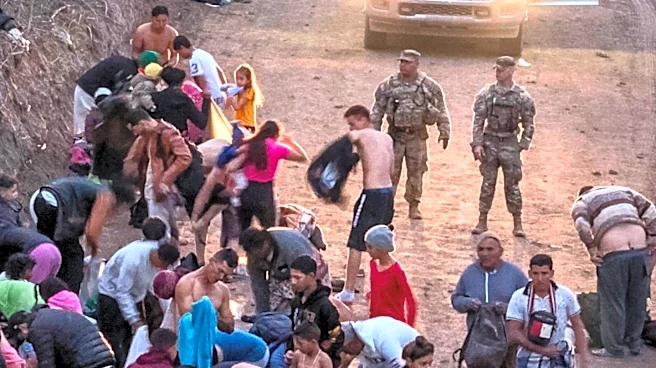
Immigration and Customs Enforcement (ICE) has been rapidly expanding its workforce as part of the Trump administration's efforts to increase immigration arrests and deportations. This expansion, supported by billions of dollars from Congress, has raised
concerns about the agency's hiring practices. A recent incident involving an ICE officer, David Brouillette, who shot a Colombian man in Maine, has brought these concerns to the forefront. Brouillette reportedly struggled with mental health issues, raising questions about the vetting process for new hires. ICE has hired 12,000 new officers and agents since the hiring surge began, with many being police and military veterans. However, there is evidence that some applicants with questionable histories were not fully vetted before being hired. The Department of Homeland Security (DHS) has defended its hiring practices, stating that rigorous vetting is conducted, including background checks and security clearances.
Why It's Important?
The rapid expansion of ICE's workforce and the potential lack of thorough vetting for new hires could have significant implications for public safety and the agency's effectiveness. The incident in Maine highlights the risks associated with hiring individuals who may not be adequately prepared for the responsibilities of law enforcement. This situation could lead to increased scrutiny of ICE's hiring practices and potentially impact the agency's ability to carry out its mission effectively. The broader implications include potential changes in public perception of ICE and its operations, as well as possible policy adjustments to ensure better oversight and accountability in the hiring process.
What's Next?
The Department of Homeland Security has announced plans to increase training for new ICE officers, with new academy training classes set to last 71 days starting July 1. Officers who graduated under the previous curriculum will receive additional training in the field. This move aims to address concerns about the adequacy of training and preparation for new hires. The DHS inspector general has also announced plans to audit ICE's hiring and training processes, although no findings have been released yet. These steps indicate a potential shift towards more stringent hiring and training protocols to prevent similar incidents in the future.