






What's Happening?
Bali is currently hosting an international forum aimed at advancing low-emission rice and livestock systems, with participants from Asia and Africa. The event, part of the FSIP-FOLUR Second Global Dialogue on Sustainable Rice Transformation, is taking
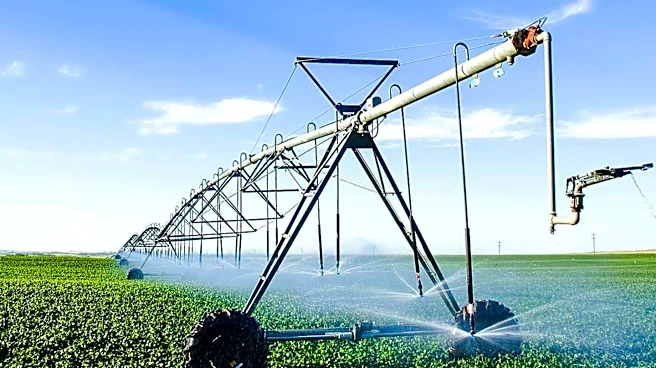
place in Sanur, Denpasar. It brings together government officials, researchers, and agricultural experts to discuss innovative technologies and strategies to tackle food security and climate change challenges. Puji Lestari, head of the Agricultural and Food Research Organization at Indonesia's National Research and Innovation Agency (BRIN), emphasized the forum's role in bridging the gap between global emissions reduction commitments and farm-level implementation. The forum addresses challenges such as limited access to technology, inadequate human resource capacity, and insufficient climate financing, which are common in developing countries. Participants are exploring various low-emission agricultural technologies, including water management in rice fields and improved fertilizer-use efficiency.
Why It's Important?
The forum is significant as it addresses the pressing issue of agricultural emissions, which account for approximately 22% of global greenhouse gas emissions. Despite this, the sector receives a relatively small share of climate funding. By focusing on low-emission agriculture, the forum aims to enhance food security and mitigate climate change impacts. The event also seeks to strengthen South-South Cooperation, facilitating innovation adoption and expanding access to financing for the agricultural sector. This collaboration is crucial for developing countries, which often face similar challenges in reducing emissions. The forum's outcomes could lead to harmonized emissions monitoring systems, stronger links between technology and national policies, and investment packages supporting low-emission agriculture.
What's Next?
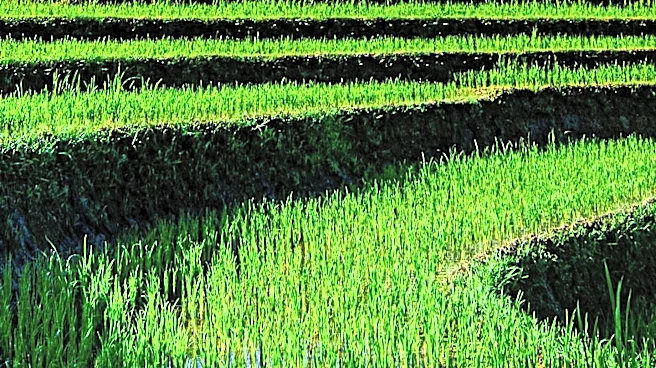
Participants are expected to produce concrete follow-up measures, including harmonizing emissions monitoring systems and developing investment packages for low-emission agriculture. The forum also aims to strengthen links between technology and national policies. As part of the event, attendees will visit Bali's Subak irrigation system, recognized globally as a model of sustainable agriculture. This visit is intended to provide practical insights into sustainable practices rooted in local wisdom. The forum is anticipated to serve as a platform for developing countries to exchange ideas and experiences, ultimately building more resilient, productive, and low-emission food systems.