


What's Happening?
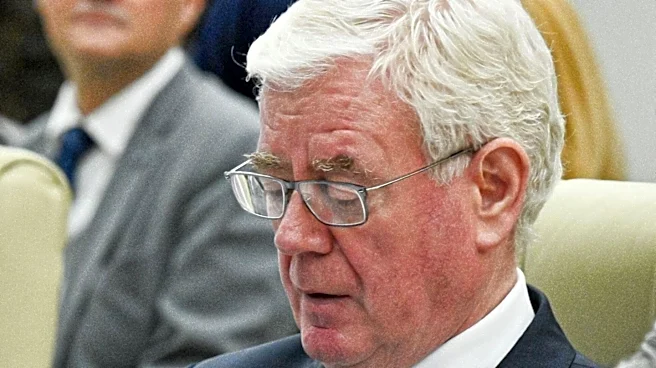
Senator Shelley Moore Capito of West Virginia voted to confirm her son, Moore Capito, as the U.S. Attorney for the Southern District of West Virginia. The confirmation vote was part of a larger batch of Trump administration nominees, passing with a tally
of 51-47. Despite the potential conflict of interest, Capito did not recuse herself from the vote. Her son's appointment to this position is notable as the office has a history of prosecuting significant public corruption cases, including one involving Moore Capito's grandfather, former Governor Arch A. Moore Jr.
Why It's Important?
The decision by Senator Capito to vote on her son's confirmation raises ethical concerns about potential conflicts of interest in political appointments. The role of a U.S. Attorney is critical, as it involves making decisions on prosecutions related to public corruption, opioid trafficking, and fraud. Given West Virginia's history with public corruption, the impartiality of the U.S. Attorney's office is of particular importance. The situation underscores the need for transparency and ethical considerations in political processes to maintain public trust.
Beyond the Headlines
The implications of this event extend beyond immediate ethical concerns. It highlights the influence of political families in government appointments and the potential for perceived biases in judicial processes. The situation also reflects broader issues of accountability and the importance of recusal in cases of potential conflicts of interest. The decision not to recuse could lead to questions about the integrity of future decisions made by the U.S. Attorney's office, particularly in cases involving political figures or entities connected to the state's Republican establishment.