
What's Happening?
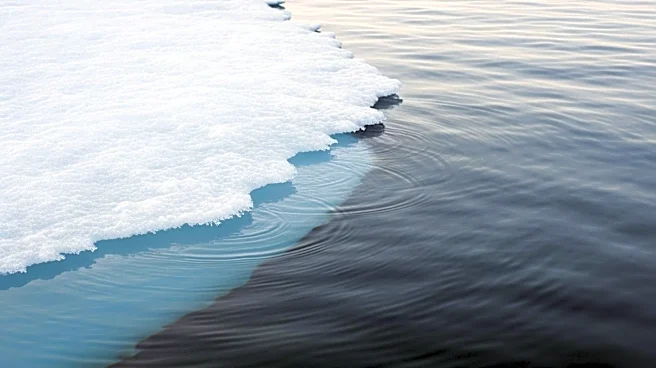
A new study reveals that Antarctica is melting from below due to rising oceanic heat, posing a threat to ice shelves and potentially accelerating global sea level rise. The research, conducted by the University
of Cambridge and the University of California, focuses on the movement of the 'circumpolar deep water,' a warm, salty mass that has expanded over the past 20 years. This undersea heat source is moving toward the Antarctic continental shelf, threatening to destabilize ice shelves. The study highlights the role of the Southern Ocean in regulating global heat and carbon storage, with changes in heat distribution having wider implications for the global climate system.
Why It's Important?
The melting of Antarctic ice shelves could have catastrophic effects, including surging sea levels in North America and drought in Europe, disrupting ecosystems and global food production. The study underscores the impact of climate change on oceanic processes, which could lead to significant shifts in global climate patterns. The potential destabilization of ice shelves could accelerate the loss of inland ice sheets and glaciers, contributing to a significant rise in sea levels. This development highlights the urgent need for global efforts to address climate change and mitigate its impacts on vulnerable regions.
What's Next?
Further research is needed to understand the full extent of the impact of rising oceanic heat on Antarctic ice shelves and global sea levels. Policymakers and environmental organizations may need to consider strategies to mitigate the effects of climate change on oceanic processes. International cooperation and investment in climate research and sustainable practices could play a crucial role in addressing these challenges. The study's findings may prompt discussions on global climate policies and the need for immediate action to prevent further environmental degradation.
Beyond the Headlines
The study raises ethical and environmental concerns about the long-term impact of human activities on the planet's climate systems. The potential consequences of rising sea levels and changing climate patterns could disproportionately affect vulnerable communities and ecosystems. This development highlights the importance of integrating climate considerations into economic and social policies to ensure sustainable development. The findings may also influence public perception and awareness of climate change, encouraging more individuals and organizations to take action to reduce their carbon footprint.