








What's Happening?
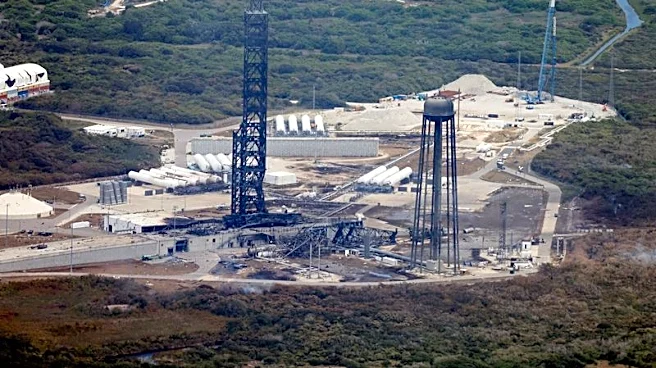
Blue Origin's New Glenn rocket experienced a significant explosion during a routine test on May 28, 2026, at Cape Canaveral Space Force Station. This incident has caused a major setback for Blue Origin and is likely to impact NASA's Artemis program, which
aims to establish a sustained human presence on the moon. The explosion destroyed the rocket and severely damaged the launch infrastructure, halting progress on the Blue Moon lander, which was scheduled to launch in fall 2026. This delay may also affect the development timeline for the crew-capable Blue Moon Mark 2. The Artemis program, which includes missions like Artemis 3 and 4, relies on lunar landers from Blue Origin and SpaceX to deliver astronauts to the moon's surface.
Why It's Important?
The explosion of the New Glenn rocket is a significant blow to Blue Origin's role in NASA's Artemis program, which is crucial for the U.S. space exploration agenda. The delay in the Blue Moon lander could force NASA to reconsider its timelines and reliance on Blue Origin for upcoming lunar missions. This incident also highlights the competitive landscape between Blue Origin and SpaceX, as both companies are contracted to support NASA's lunar ambitions. The setback may give SpaceX an advantage in the race to provide lunar landers, potentially altering the dynamics of future space exploration contracts and collaborations.
What's Next?
Blue Origin will need to investigate the cause of the explosion and rebuild the damaged launch infrastructure at LC-36. This process could take considerable time, potentially grounding the New Glenn rocket for an extended period. NASA may need to adjust its Artemis program timelines and explore alternative options to ensure the continuation of its lunar missions. The incident underscores the importance of having multiple providers for critical space missions, and NASA may increase its collaboration with SpaceX or other companies to mitigate risks associated with such setbacks.