



What's Happening?
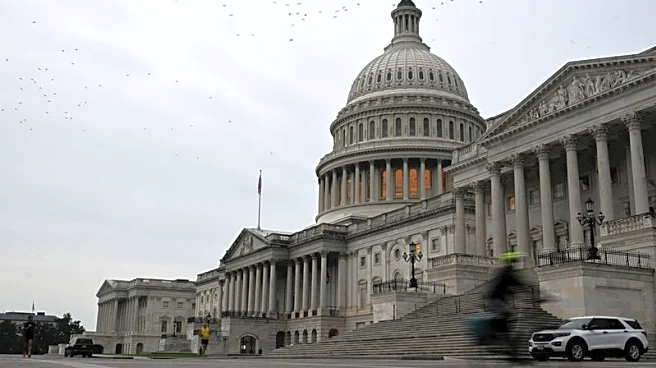
Speaker Mike Johnson has introduced a Republican health care plan as the party seeks alternatives to the expiring enhanced tax subsidies under the Affordable Care Act (ACA), commonly known as Obamacare. The proposed plan, which is set to be voted on next
week, aims to address health care costs by enhancing access to employer-sponsored insurance and regulating pharmacy benefit managers. However, it does not extend the enhanced tax credits that are set to expire at the end of the year, potentially doubling out-of-pocket premiums for many families. The plan has faced criticism from House Democratic Leader Hakeem Jeffries, who labeled it as 'toxic' and unlikely to secure bipartisan support. The Senate recently failed to advance both Republican and Democratic health care proposals, leaving Congress with limited time to reach a consensus.
Why It's Important?
The expiration of the enhanced ACA subsidies could significantly impact millions of Americans who rely on these credits to afford health insurance. Without an extension, many families may face increased premiums, which could lead to a rise in uninsured individuals. The Republican proposal's focus on employer-sponsored plans and pharmacy benefit managers reflects ongoing debates about the best ways to reduce health care costs. The lack of bipartisan agreement highlights the challenges in reforming health care policy, a critical issue affecting economic stability and public health. The outcome of this legislative effort could influence voter sentiment and political dynamics, especially in battleground districts.
What's Next?
As the House prepares to vote on the Republican health care plan, political pressure mounts on vulnerable Republicans in key districts. Some centrist GOP lawmakers are collaborating with Democrats to propose temporary extensions of the ACA subsidies. Discharge petitions, which could force a vote on these proposals, are gaining traction. The outcome of these efforts will determine whether a temporary solution can be reached to prevent a lapse in subsidies. The political stakes are high, with potential implications for upcoming elections and the broader health care policy landscape.