







What's Happening?
China is solidifying its position as a central hub in global supply chains, particularly through the trade of intermediate goods. This development is part of China's broader strategy to integrate more deeply into international industrial networks. The
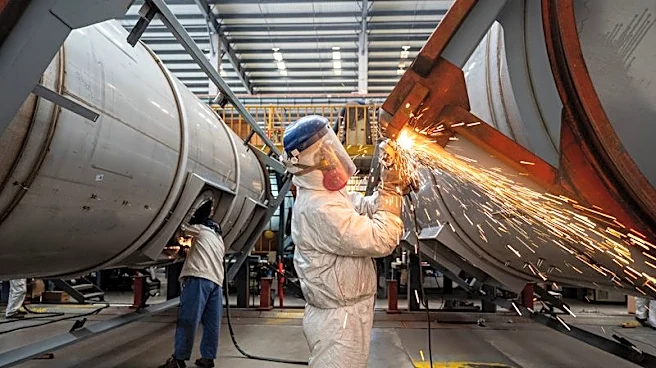
country's manufacturing sector, which has been the largest in the world for 16 consecutive years, accounted for nearly 30% of the global manufacturing value in 2025. China's 15th Five-Year Plan (2026-2030) aims to further expand trade in intermediate goods and rationalize the distribution of industrial and supply chains globally. This strategy is supported by technological advancements and partnerships with over 130 firms worldwide, enhancing China's production capabilities and attracting more global clients.
Why It's Important?
China's growing role in the global supply chain has significant implications for international trade and economic stability. As a major player in the trade of intermediate goods, China supports industrialization in regions like Southeast Asia and Africa, thereby influencing global economic patterns. The country's ability to maintain a resilient and responsive manufacturing sector makes it a crucial node in the global value chain. This expansion not only strengthens China's economic influence but also impacts global supply chain dynamics, potentially affecting industries and economies worldwide.
What's Next?
China's continued focus on expanding its role in global supply chains suggests a strategic shift towards more sustainable and integrated economic practices. The country's efforts to enhance logistics and transportation networks, such as the development of the Zhengzhou-Luxembourg dual-hub model, indicate a commitment to stabilizing global supply chains. As China implements its Five-Year Plan, the international community may see increased collaboration and competition in the manufacturing and trade sectors, with potential shifts in global economic power dynamics.