






What's Happening?
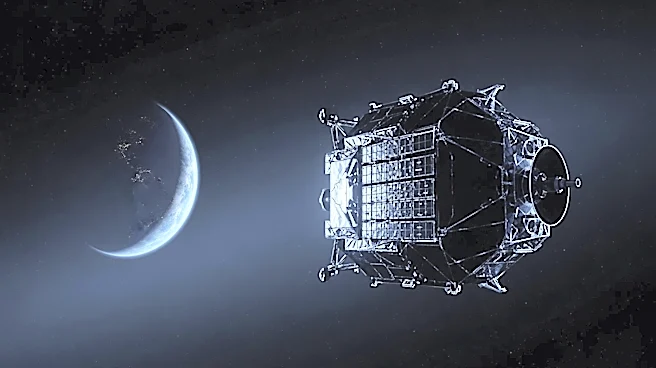
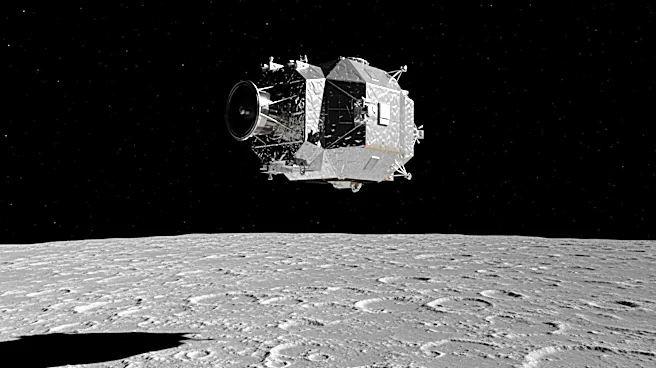
Blue Origin's uncrewed lunar lander, Moon Mark 1 (MK1), has successfully completed its testing in a vacuum chamber at NASA's Johnson Space Center. This marks a significant milestone for the company as it prepares to participate in NASA's Artemis program,
which aims to return humans to the moon by 2028. The tests evaluated the lander's ability to withstand extreme temperatures and the vacuum of space, ensuring its readiness for future lunar missions. The MK1 is scheduled to carry NASA science experiments and technology to the moon's south pole as early as late 2026.
Why It's Important?
The successful testing of Blue Origin's MK1 lander is a crucial step in the collaboration between private companies and NASA to advance space exploration. This development supports the Artemis program's goal of establishing a sustainable human presence on the moon, which could pave the way for future missions to Mars and beyond. The involvement of private companies like Blue Origin in space exploration can accelerate technological advancements, reduce costs, and increase innovation. This partnership also highlights the growing role of the private sector in achieving national and international space exploration objectives.
What's Next?
Following the successful tests, Blue Origin will continue to prepare the MK1 lander for its mission to the moon's south pole. The company will focus on integrating the lander with NASA's Artemis program and ensuring all systems are ready for the scheduled launch. As the Artemis program progresses, further collaborations between NASA and private companies are expected, potentially leading to more frequent and diverse lunar missions. The success of these missions could influence future space policy and funding, encouraging more investment in space exploration and technology development.