






What's Happening?
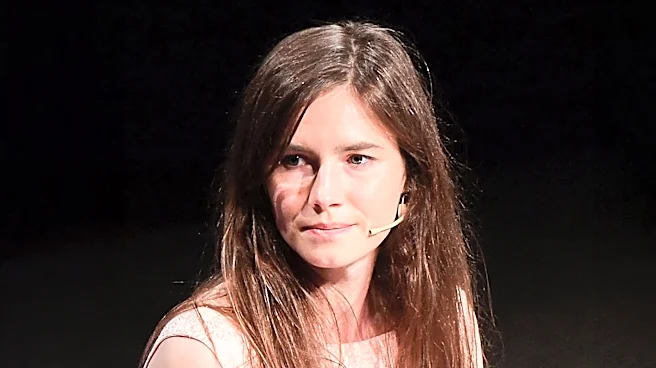
Amanda Knox, previously involved in a high-profile international legal case, recently appeared on Verissimo with her husband, Christopher Robinson, and their children, Eureka (born 2021) and Echo (born 2023). During the interview, Knox discussed her life
since returning to the United States. Her husband, Christopher, shared that he met Knox without prior knowledge of her past, recognizing her as a writer and a 'book nerd' who sought joy despite carrying a burden of pain. Knox credited Christopher with encouraging her to speak out and defend herself, stating she wouldn't be where she is today without his support. Christopher, in turn, expressed pride in Knox, calling her the bravest person he knows and an inspiration for him to be a better person.
Why It's Important?
This interview offers a significant personal update on Amanda Knox, a figure whose legal ordeal captivated international attention. Her public appearance with her family and candid discussion about her post-trial life provide insight into her personal journey of rebuilding and finding stability. The emphasis on her husband's role in her healing and empowerment highlights the profound impact of personal relationships in overcoming traumatic experiences. For the public, it humanizes a figure often defined by a sensationalized past, shifting the narrative towards her present life as a wife and mother. This also underscores the long-term psychological and social challenges individuals face after being at the center of intense media scrutiny and legal battles, even after exoneration.
What's Next?
Amanda Knox continues to engage with the public through various platforms, including comedy shows and interviews, to share her perspective and experiences. Her ongoing willingness to discuss her past and present suggests a continued effort to reclaim her narrative and advocate for issues related to wrongful conviction and media ethics. Future appearances or projects may further explore these themes, potentially influencing public discourse on justice, media responsibility, and the personal toll of legal battles. Her story may also continue to serve as a case study in legal and journalistic circles regarding the complexities of international law and media representation.
Beyond the Headlines
The interview subtly touches upon the ethical implications of media portrayal and the lasting impact of public perception on an individual's life. Knox's journey from being a central figure in a murder trial to a public advocate and family woman highlights the challenges of reintegration into society after such an experience. It also raises questions about the public's role in shaping narratives and the potential for redemption and personal growth even after profound adversity. Her husband's testimony about not knowing her past initially underscores the importance of seeing individuals beyond their most publicized moments, emphasizing character over sensationalized history. This narrative contributes to a broader conversation about empathy, forgiveness, and the human capacity for resilience.