










What's Happening?
Psychologist Candice Odgers argues against the effectiveness of social media bans for teenagers, suggesting that such measures may worsen the situation rather than improve it. Odgers, a professor of developmental psychology, emphasizes that social media can
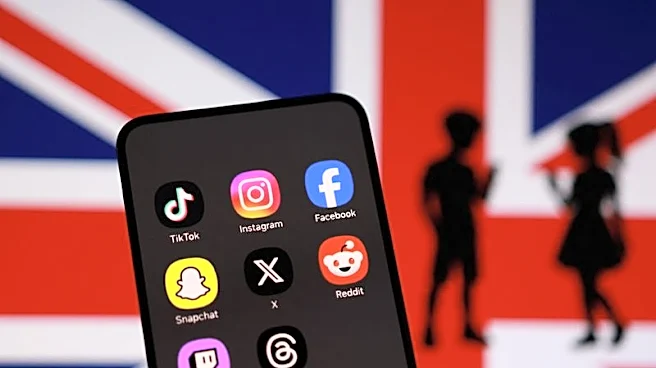
have both positive and negative effects on mental health, depending on the user's motivations. She criticizes the UK government's proposed social media curfew for teenagers, which is not mandatory, and suggests that governments should focus on building better communities and physical spaces for children. Odgers highlights the need for a nuanced understanding of social media's impact, pointing out that it is not the primary cause of mental health issues among adolescents.
Why It's Important?
The debate over social media's impact on mental health is significant as it influences public policy and parental decisions. Odgers' perspective challenges the prevailing narrative that social media is inherently harmful, suggesting that a more balanced approach is needed. Her views could impact how governments and educational institutions address online safety and mental health, potentially leading to more comprehensive strategies that include community building and support systems. This discussion is crucial as it affects the well-being of young people and the development of policies that aim to protect them.
What's Next?
Odgers advocates for a shift in focus from banning social media to creating supportive environments for children. This could involve increased investment in community resources and educational programs that promote healthy social interactions. Policymakers may need to consider these alternatives as they develop strategies to address the mental health crisis among adolescents. The ongoing debate may also lead to further research into the complex relationship between social media use and mental health, potentially influencing future legislation and educational practices.