
What's Happening?
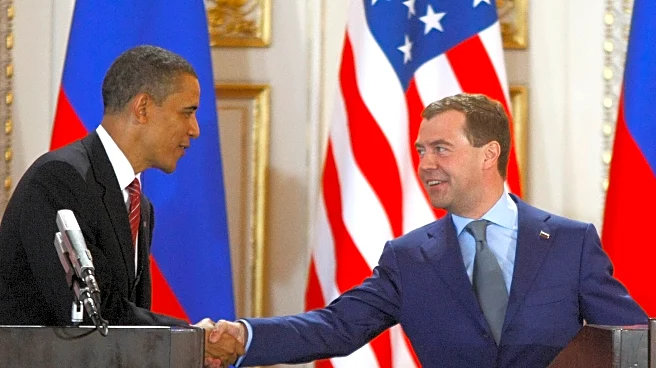
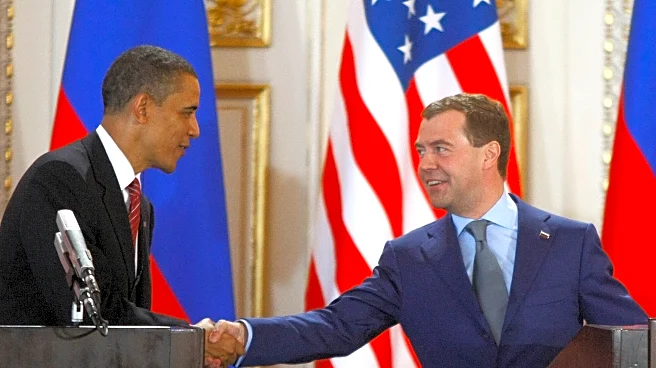
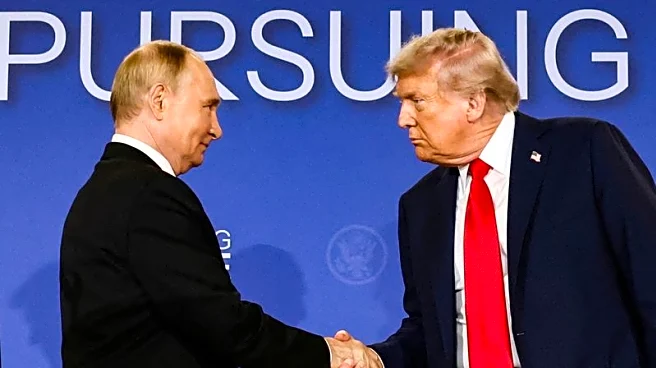
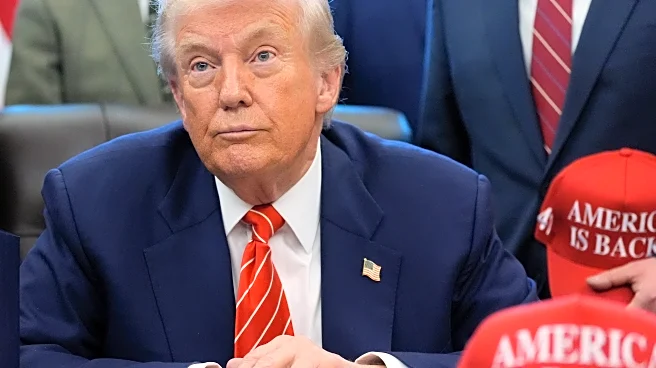
President Donald Trump has extended an invitation to Russian President Vladimir Putin to join the 'Board of Peace,' a council aimed at overseeing the reconstruction of Gaza and maintaining a ceasefire between Israel and Hamas. The Kremlin, through Spokesman
Dmitry Peskov, confirmed receipt of the invitation and stated that Moscow is reviewing the proposal. The 'Board of Peace' was established by President Trump to facilitate international cooperation in rebuilding Gaza following prolonged conflict. Invitations have also been extended to leaders from Canada, Argentina, Hungary, India, Jordan, Greece, Cyprus, and Pakistan. The Trump administration reportedly requires nations to contribute $1 billion to remain on the board indefinitely. The initiative has sparked controversy, particularly with Israel, whose Prime Minister Benjamin Netanyahu expressed dissatisfaction with the board's composition, stating it was not coordinated with Israeli policy.
Why It's Important?
The invitation to President Putin is significant as it involves Russia in a major U.S.-led international initiative, despite ongoing tensions due to Russia's conflict with Ukraine. The 'Board of Peace' represents a strategic effort by the Trump administration to engage multiple nations in Middle Eastern peace efforts, potentially altering geopolitical dynamics. The financial requirement for board membership could influence international relations and economic commitments. Israel's discontent highlights potential diplomatic challenges, as the board's actions may conflict with existing regional policies. The involvement of high-profile figures like former U.K. Prime Minister Tony Blair and U.S. Secretary of State Marco Rubio underscores the board's prominence and the high stakes involved.
What's Next?
The Kremlin is expected to further engage with the U.S. to clarify details of the invitation. The response from Russia and other invited nations will shape the board's composition and influence its effectiveness in achieving its goals. Israel's reaction suggests potential diplomatic negotiations or adjustments to the board's structure to address regional concerns. The financial aspect of board membership may lead to discussions on funding and international contributions. The board's development will be closely watched by global stakeholders, as it could set precedents for future international peacekeeping and reconstruction efforts.