






What's Happening?
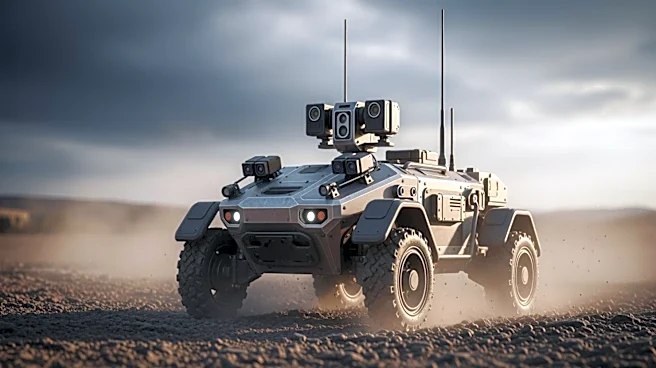
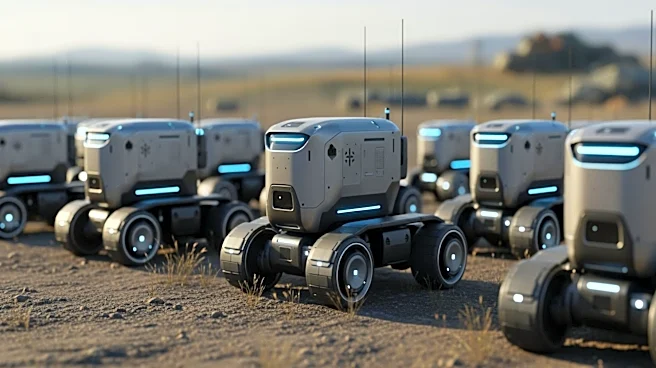
Ukraine's Defense Ministry is set to deploy 25,000 unmanned ground vehicles (UGVs) in the first half of 2026, aiming to replace soldiers in frontline logistics roles. This initiative is part of a broader strategy to enhance operational efficiency and
safety by shifting logistics tasks from human soldiers to robotic systems. The ministry has already invested over 14 billion hryvnia (approximately $330 million) in drones, UGVs, and electronic warfare systems through a digital procurement system. This system allows frontline units to order equipment directly from domestic manufacturers. The Bizon-L, a logistics robot with a 300-kilogram payload and a 50-kilometer range, has been codified under NATO standards and cleared for operational use. Ukrainian forces have conducted over 22,000 unmanned missions in recent months, significantly reducing the risk to human soldiers.
Why It's Important?
The deployment of UGVs represents a significant shift in military logistics, potentially setting a precedent for other nations. By automating logistics, Ukraine aims to protect human life and increase operational efficiency on the battlefield. This move could influence global military strategies, emphasizing the role of technology in modern warfare. The investment in UGVs also supports Ukraine's defense industry, fostering innovation and economic growth. The initiative aligns with Ukraine's broader defense strategy, which includes enhancing its technological capabilities to counter external threats. The success of this program could lead to increased international support and collaboration, particularly from NATO allies.
What's Next?
Ukraine plans to continue scaling up the production of UGVs, with the goal of having all frontline logistics performed by robotic systems. The Defense Ministry is already signing contracts for 2027 to ensure a stable supply chain for manufacturers. This ongoing commitment to technological advancement may attract further investment and partnerships from international defense companies. Additionally, the successful implementation of UGVs could prompt other countries to adopt similar strategies, potentially leading to a global shift in military logistics practices.
Beyond the Headlines
The use of UGVs raises ethical and legal questions about the role of autonomous systems in warfare. As these technologies become more prevalent, there will be increased scrutiny on their deployment and the potential implications for international humanitarian law. The shift towards automation in military operations also highlights the need for robust cybersecurity measures to protect these systems from potential hacking or misuse. Furthermore, the reliance on technology in warfare underscores the importance of maintaining a skilled workforce capable of developing and managing these advanced systems.