







What's Happening?
Several Cabinet-level agencies within the Trump administration have launched TikTok campaigns following the Justice Department's determination that the app is safe for federal employees. This initiative aims to engage younger generations. For instance,
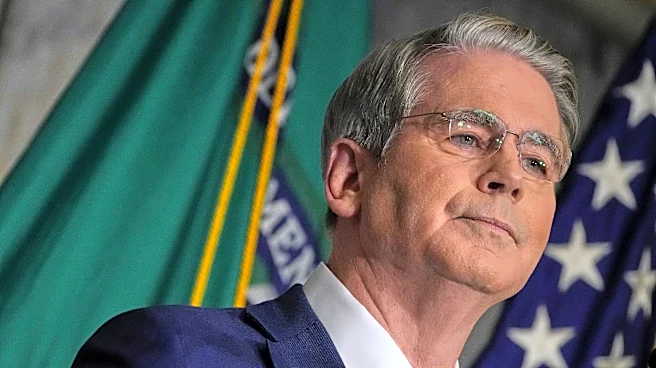
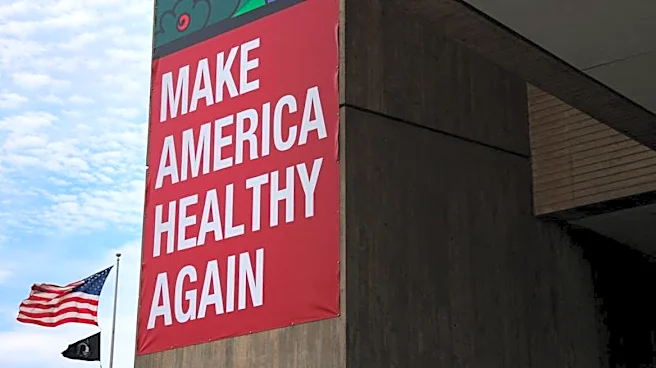
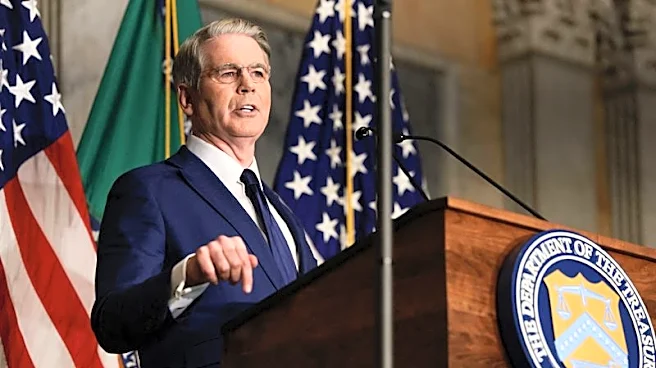
Veterans Affairs Secretary Doug Collins posted a video featuring him doing pushups and appearing at various events, set to the 2003 song 'Salt Shaker' by the Ying Yang Twins. The Department of the Interior shared a video warning about bison during mating season, accompanied by Boyz II Men's 'I’ll Make Love to You.' The Small Business Administration featured 'Jimothy,' a viral raccoon, to promote local shopping. Treasury Secretary Scott Bessent participated in a trend with Nicki Minaj to her song 'Beez in the Trap.' Health and Human Services Secretary Robert F. Kennedy Jr.'s page includes a video depicting 'America after becoming healthy again' with various athletic imagery. The Department of Transportation is using TikTok to recruit air traffic controllers, highlighting gaming skills as a career asset. These efforts are part of a broader strategy to transform how Americans interact with their government by publishing engaging social media content.
Why It's Important?
The Trump administration's adoption of TikTok for Cabinet secretaries marks a significant shift in government communication strategies, aiming to reach a younger demographic through a popular social media platform. This move could redefine public engagement with federal agencies, potentially making government more accessible and relatable to a segment of the population traditionally less engaged with political discourse. However, the approach has drawn criticism, particularly regarding the content and messaging. The VA Secretary's video, for example, has been criticized by agency sources and a union representative for focusing on the Secretary's personal brand rather than veteran-centric communications, and for using explicit song lyrics. This raises questions about the appropriateness of certain content for official government channels and the potential for misinterpretation or distraction from core agency missions. The use of viral trends and popular music, while intended to increase reach, also risks trivializing serious government functions or alienating segments of the public who may find the content unprofessional or out of touch.
What's Next?
The continued use of TikTok by Trump administration Cabinet secretaries will likely lead to ongoing scrutiny and debate regarding the effectiveness and appropriateness of such communication methods. Agencies may refine their content strategies based on public and internal feedback, potentially leading to more tailored and less controversial posts. There could be further discussions within government about guidelines for official social media use, particularly concerning the balance between engaging content and maintaining a professional image. The success of these campaigns in recruiting for roles like air traffic controllers, as seen with the Department of Transportation, could encourage other agencies to adopt similar targeted recruitment efforts. Conversely, persistent criticism, especially from within the agencies themselves, could lead to a re-evaluation or scaling back of certain types of content. The broader impact on public perception of government and the role of social media in political communication will continue to unfold.
Beyond the Headlines
The Trump administration's foray into TikTok highlights a deeper cultural and technological shift in how institutions, including government, attempt to connect with the public. It underscores the challenge of adapting traditional communication to the fast-paced, trend-driven environment of social media. The use of popular music and viral formats by Cabinet secretaries raises ethical questions about the blurring lines between entertainment and official government messaging. It also touches upon the generational divide in media consumption and the government's effort to bridge this gap. The criticism surrounding the VA Secretary's video, particularly concerning the focus on personal branding over public service and the use of explicit lyrics, points to the inherent risks of adopting platforms designed for individual expression for institutional purposes. This trend could lead to a redefinition of what constitutes 'appropriate' public communication for government officials, potentially influencing future policies on digital engagement and the training of public servants in social media literacy. The long-term implications could include a more personalized, yet potentially less formal, relationship between citizens and their government.