
What's Happening?
NASA has selected 34 global volunteers to track the Orion spacecraft during the Artemis II mission, which is a significant step in the Artemis campaign aimed at establishing a long-term presence on the Moon.
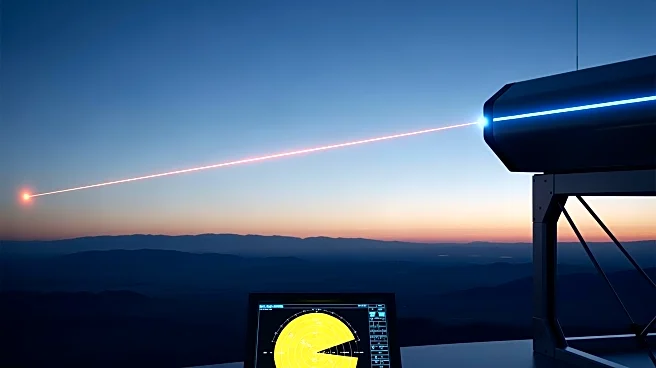
The mission will involve the Space Launch System (SLS) rocket carrying the Orion spacecraft and a crew of four astronauts on a journey around the Moon. This initiative builds on a previous effort where 10 volunteers successfully tracked the Orion spacecraft during Artemis I in 2022. The selected participants, including commercial service providers, academia, and amateur radio enthusiasts, will use their equipment to passively track radio waves transmitted by Orion during its approximately 10-day journey. This effort is part of NASA's SCaN (Space Communication and Navigation) program, which aims to strengthen the marketplace for space exploration by involving external organizations in human spaceflight missions.
Why It's Important?
The involvement of global volunteers in tracking the Artemis II mission represents a shift towards a more collaborative approach in space exploration. By engaging commercial and academic entities, NASA is fostering a public-private ecosystem that could enhance the resilience and capabilities of future space missions. This initiative not only supports the Artemis program's goal of lunar exploration but also lays the groundwork for future missions to Mars. The data collected by these volunteers will help NASA assess the broader aerospace community's tracking capabilities, potentially leading to improved support for future Moon and Mars missions. This collaborative effort underscores the importance of international cooperation and innovation in advancing space exploration.
What's Next?
As the Artemis II mission progresses, NASA will analyze the data submitted by the volunteers to enhance its understanding of tracking capabilities. This analysis will inform future missions and help identify ways to augment support for lunar and Martian exploration. The success of this initiative could lead to increased public interest and participation in space missions, further strengthening the global space exploration community. Additionally, the lessons learned from this mission will contribute to the development of new technologies and standards for spaceflight communications and data systems.