



What's Happening?
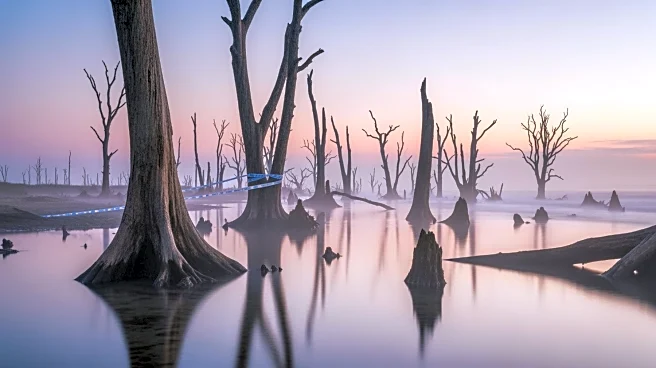
A recent study conducted by a team of researchers from the University of Virginia and other institutions has revealed the extensive spread of 'ghost forests' along the U.S. East Coast. These ghost forests, characterized by dead and dying trees, are a stark
indicator of climate change impacts, particularly rising sea levels and increased salinity. The study utilized high-resolution aerial imagery and a computer model to identify over 11 million dead trees across coastal forests in 11 states, from South Carolina to Maine. The findings, published in the journal Nature Sustainability, show that many of these forests are succumbing to saltwater intrusion, exacerbated by human-made structures like roads and levees that sometimes slow the process. The research highlights the urgent need for strategic planning to preserve these critical ecosystems, which play a vital role in carbon sequestration, storm mitigation, and habitat provision.
Why It's Important?
The mapping of ghost forests is significant as it underscores the broader environmental challenges posed by climate change. Coastal forests are crucial for carbon storage, and their decline could lead to increased carbon emissions, further exacerbating global warming. Additionally, these forests provide essential ecosystem services, such as protecting coastal communities from storm surges and maintaining water quality. The study's findings emphasize the need for proactive measures to manage and mitigate the impacts of rising sea levels and salinity on these vital ecosystems. The public availability of the maps allows conservation managers to identify and address areas of high tree mortality, potentially guiding efforts to preserve these forests and their ecological functions.
What's Next?
Future research will likely focus on understanding the specific causes of ghost forest expansion and exploring mitigation strategies. Scientists may investigate the role of human interventions, such as the construction of barriers, in slowing the spread of saltwater intrusion. Additionally, policymakers and conservationists might use the study's findings to develop targeted conservation strategies aimed at preserving coastal forests. This could involve restoring natural hydrology, enhancing coastal resilience, and implementing adaptive management practices to protect these ecosystems from further degradation.
Beyond the Headlines
The phenomenon of ghost forests also raises ethical and cultural questions about land use and environmental stewardship. As these landscapes transform, there may be implications for local communities that rely on coastal forests for their livelihoods and cultural heritage. The study highlights the interconnectedness of human and natural systems, prompting discussions about sustainable development and the balance between economic growth and environmental conservation.