
What's Happening?
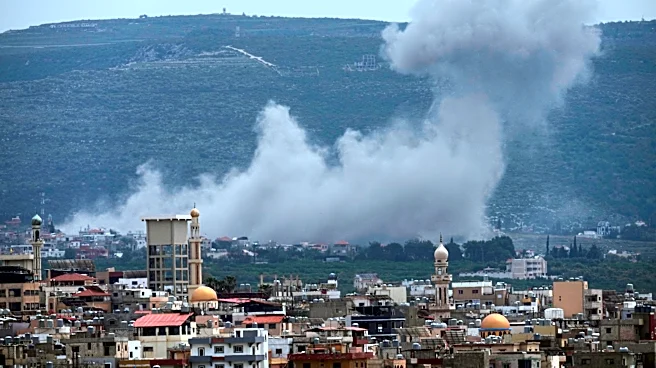
President Trump has played a key role in facilitating a ten-day ceasefire between Israel and Lebanon, following productive peace talks in Washington, DC. The ceasefire, which began on April 16, aims to halt
hostilities between Israel and Hezbollah, with the hope of leading to a more permanent peace agreement. The talks, brokered by the United States, mark the first face-to-face negotiations between the two countries in over three decades. The agreement emphasizes the need for Lebanon to control non-state actors like Hezbollah to ensure regional stability.
Why It's Important?
The ceasefire represents a significant diplomatic achievement for the Trump administration and highlights the United States' role in mediating Middle Eastern conflicts. Successful implementation of the ceasefire could lead to a reduction in regional tensions and pave the way for a lasting peace agreement. However, the involvement of non-state actors like Hezbollah poses a challenge to the agreement's durability. The outcome of these negotiations could have a profound impact on regional security and the geopolitical landscape, influencing international relations and U.S. foreign policy in the Middle East.
What's Next?
The next steps involve continued diplomatic efforts to solidify the ceasefire and address the underlying issues that have fueled the conflict. President Trump has expressed his intention to invite Israeli and Lebanese leaders to the White House for further negotiations. The success of these talks will depend on both countries' ability to manage non-state actors and commit to a peaceful resolution. The international community will be closely monitoring the situation, as the outcome could set a precedent for future conflict resolution efforts in the region.