








What's Happening?
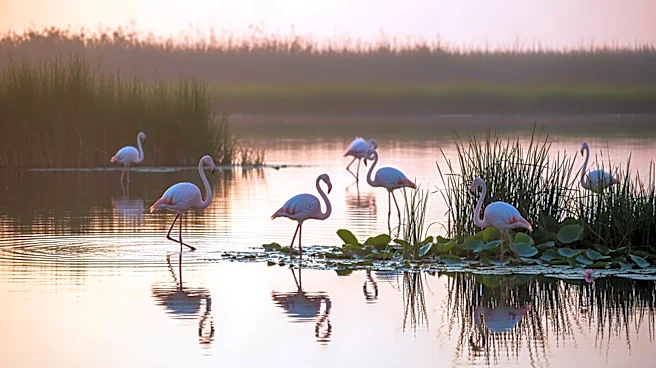
Venice's wetlands are witnessing a significant increase in flamingo populations, as ecological restoration efforts have improved the habitat's suitability for these birds. The Venetian Lagoon, historically a salt marsh, has seen flamingos flocking in record
numbers, with nearly 24,000 wintering birds counted last year. This marks an increase of 6,000 from the previous year, positioning the lagoon as a crucial wintering spot for flamingos. Environmentalists view this as a positive sign of the lagoon's health and its potential as a feeding ground. Efforts to reconstruct salt marshes in the southern lagoon aim to further expand flamingo habitats, potentially drawing them away from human activities in the north.
Why It's Important?
The growing presence of flamingos in Venice highlights the success of ecological restoration projects and underscores the importance of preserving natural habitats. This development not only enhances biodiversity but also contributes to climate change mitigation by increasing the lagoon's capacity to capture carbon dioxide. The restoration of salt marshes is crucial for maintaining the ecological balance and preventing the lagoon from becoming a marine bay due to erosion. The flamingos' arrival also offers a new perspective for visitors, emphasizing the ecological significance of Venice beyond its historical and artistic heritage.
What's Next?
Continued efforts to reconstruct salt marshes in the Venetian Lagoon are expected to further increase flamingo populations. Environmentalists are hopeful that these birds will eventually establish a self-sustaining colony in the area. The EU's WaterLANDS project aims to make salt marsh reconstruction scalable, potentially leading to larger areas being restored for meaningful climate benefits. As flamingo numbers grow, their presence may become more common in accessible areas, offering new opportunities for eco-tourism while ensuring respect for the animals' natural behaviors.
Beyond the Headlines
The restoration of Venice's wetlands not only benefits flamingos but also serves as a model for ecological recovery in other regions. The project demonstrates the potential for reversing environmental degradation and highlights the interconnectedness of biodiversity and climate change mitigation. By increasing biodiversity, the reconstructed marshes can become more resilient to erosion and other environmental challenges. This initiative reflects a broader trend towards sustainable practices and conservation efforts, which are essential for preserving natural ecosystems in the face of global environmental changes.