




What's Happening?
British seas are experiencing marine heatwaves with increasing frequency and severity, leading to significant shifts in marine life and ecosystems. Last year was deemed 'exceptional' by the Met Office, with some parts of British waters experiencing heatwave conditions
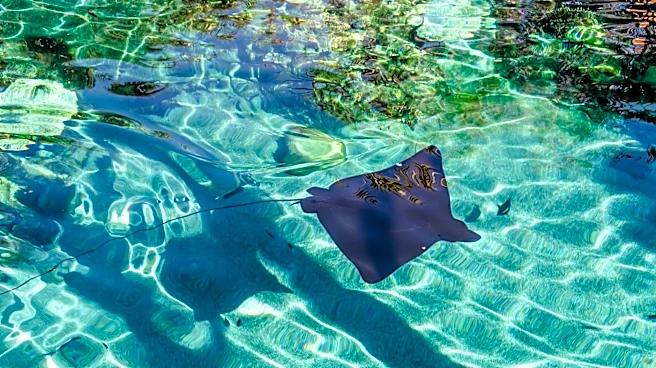
for three-quarters of the year, a trend continuing into 2026. These elevated temperatures are causing cold-water species, such as cod and small spotted catsharks, to move to cooler waters further north, with some now thriving in Scotland. Conversely, warm-water species like bass, comber, triggerfish, sardines, and anchovies are becoming more prevalent in southern British waters. The warmer conditions have also led to a surge in sightings of sunfish and an increase in common octopuses, which have impacted lobster and crab fisheries. Additionally, new species, including smalltooth sand tiger sharks and hair curler sea slugs, typically found in the Caribbean and Mediterranean, are appearing off UK shores. Harmful algal blooms, which can sicken marine life and humans, are also a concern.
Why It's Important?
These marine heatwaves represent a profound ecological transformation with significant implications for the UK's marine biodiversity, fishing industries, and coastal communities. The displacement of cold-water species threatens traditional fisheries and the livelihoods of those dependent on them, while the influx of warm-water species creates new, often unpredictable, ecological dynamics. The decline of vital habitats like seagrass meadows and kelp forests, which are crucial for carbon storage and coastal protection, exacerbates the environmental impact. This shift could lead to a loss of ecosystem services, including natural defenses against erosion and flooding. For the fishing industry, adapting to these changes will require significant adjustments in fishing practices and target species. The increased frequency of harmful algal blooms also poses public health risks, potentially leading to beach closures and impacting coastal tourism. This situation highlights the urgent need for comprehensive marine conservation strategies and climate adaptation measures to protect the UK's marine environment and its associated economies.
What's Next?
The long-term consequences of these marine heatwaves are still unfolding. Experts are uncertain whether cold-water species that have moved north will return once temperatures stabilize, suggesting that some shifts may be permanent. This could lead to a fundamental restructuring of British fisheries, with southern vessels potentially pivoting to target newly abundant warm-water species, while Scotland might benefit from the northward migration of species like cod. Efforts are underway to mitigate the impact on critical habitats, such as the Hastings Kelp Project and the Seagrass Ocean Rescue project, which aim to restore kelp and seagrass meadows. However, the infrastructure for managing new risks, such as widespread beach closures due to harmful algal blooms, is not yet fully established. Continued monitoring and research are crucial to understand the full extent of these ecological changes and to develop effective adaptation and conservation strategies.
Beyond the Headlines
The 'new normal' of marine heatwaves in British seas underscores the pervasive and often hidden impacts of climate change on global ecosystems. Beyond the immediate ecological and economic consequences, this phenomenon raises deeper questions about the resilience of marine life and the interconnectedness of global climate systems. The appearance of species from warmer regions and the displacement of native cold-water species illustrate a rapid biological response to environmental change, potentially leading to novel ecosystems with unknown long-term stability. This situation also highlights the limitations of national conservation efforts in the face of global climate trends, emphasizing the need for international cooperation and ambitious climate action. The ethical implications of human-induced climate change driving such profound shifts in natural environments, and the responsibility to protect marine biodiversity for future generations, become increasingly prominent.