





What's Happening?
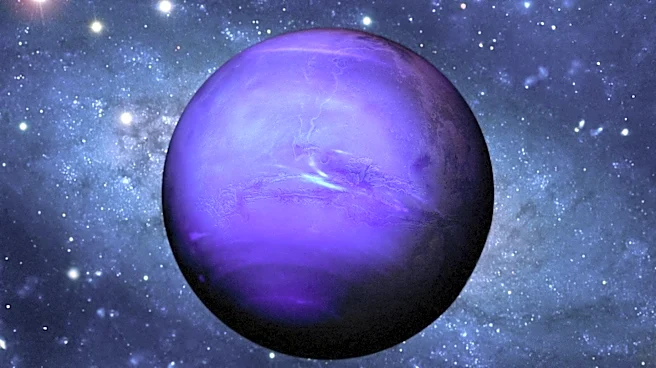
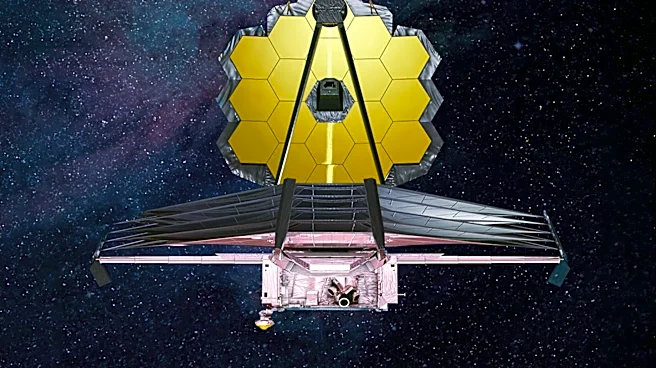
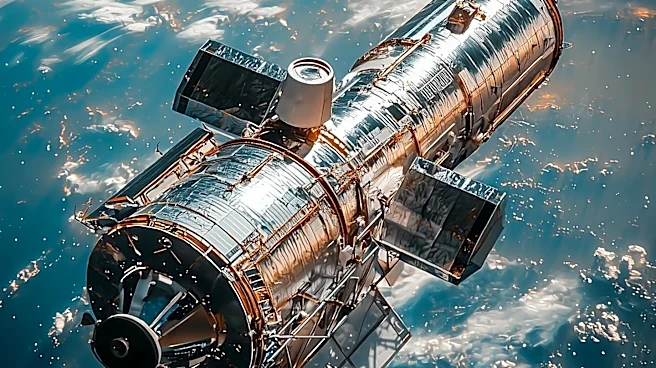
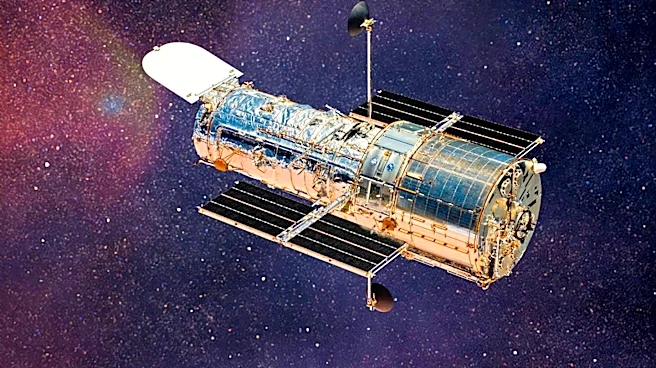
The Hubble Space Telescope and the James Webb Space Telescope have jointly identified 27 previously unknown Trans-Neptunian Objects (TNOs) orbiting the sun far beyond Neptune. These TNOs, ranging from 6 to 25 miles (10 to 40 kilometers) in diameter, are
significantly smaller than most previously observed objects in this region. The observations, led by PhD candidates Anastasia Morgan and Marielle Eduardo, reveal that these small TNOs retain their pristine surface compositions, contrary to predictions from current models of their formation. These models suggested that such objects should have experienced numerous impacts, altering their surfaces. The unexpected preservation of their original state, even for 'hot' TNOs that have been gravitationally scattered, indicates that either fewer impacts occur in the outer solar system than theorized, or impacts do not affect the surfaces of small TNOs as significantly as expected. The James Webb Space Telescope's infrared capabilities were crucial in accurately determining the sizes of these faint objects, which shine between magnitudes 24.1 and 29.3, making them incredibly difficult to detect.
Why It's Important?
This discovery is important because it challenges existing scientific models regarding the formation and evolution of planetesimals and the early solar system. The unexpected pristine condition of these small TNOs suggests that the processes of impact and surface alteration in the outer solar system may be less aggressive or different than previously understood. This could lead to a re-evaluation of how planetesimals, the building blocks of planets, formed and interacted in the early stages of our solar system's development. Understanding these processes is fundamental to comprehending the origins of our own planet and others. Furthermore, the finding that the size distribution of these TNOs is consistent across both 'cold' and 'hot' populations, despite forming in different regions, implies a universality in planetesimal formation that is insensitive to the specific conditions of the protoplanetary disk. This insight could refine our understanding of planetary system formation beyond our own, impacting exoplanet research and the search for life.
What's Next?
Future research will likely focus on refining models of planetesimal formation and impact dynamics in the outer solar system to account for these new observations. Astronomers will need to investigate why these small TNOs have preserved their original surface compositions, potentially leading to new theories about the frequency and nature of collisions in the Kuiper Belt and Scattered Disk. Further observations with advanced telescopes, including the upcoming Nancy Grace Roman Space Telescope, which will have a significantly larger field of view, could help identify more such objects and provide additional data to test these revised models. The continued collaboration between the Hubble and James Webb telescopes, pushing their observational limits, will be crucial for deeper surveys into the trans-Neptunian realm, potentially uncovering more anomalies that could further reshape our understanding of the solar system's distant reaches and its evolutionary history.
Beyond the Headlines
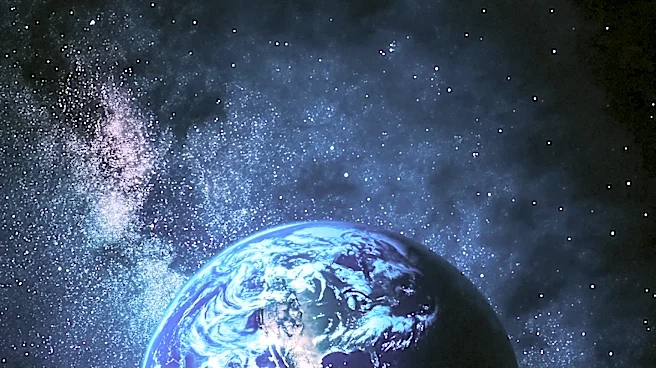
The discovery of these puzzling TNOs highlights the continuous evolution of scientific understanding through advanced observational capabilities. It underscores that even in well-studied areas like our solar system, there are still fundamental mysteries to unravel. The 'overview effect' often described by astronauts, a profound sense of awe and interconnectedness when viewing Earth from space, can be paralleled by the scientific community's experience when new data challenges long-held theories. This constant questioning and refinement of knowledge are at the heart of scientific progress. The ability of these telescopes to detect objects equivalent to 'seeing a swarm of fireflies on the moon from Earth' also showcases the remarkable technological advancements in space exploration, pushing the boundaries of what is observable and knowable about the universe. This ongoing quest for knowledge not only expands our cosmic perspective but also inspires future generations of scientists and engineers.