
What's Happening?
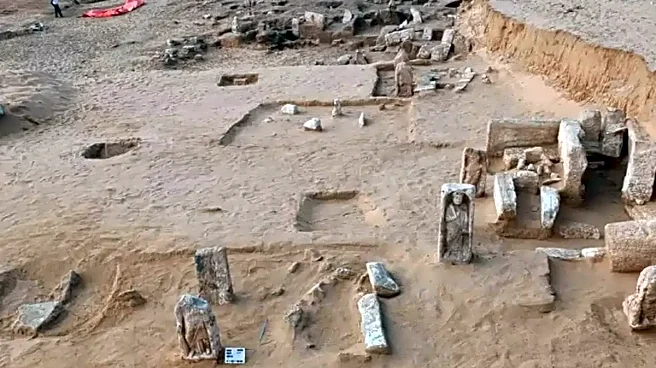
Archaeologists in Egypt have uncovered 18 tombs and a variety of artifacts in the ancient city of Marina El Alamein. The discovery was made during excavations for a new visitor center. The tombs, some carved into rock and others made of limestone, date
back to the Hellenistic and Byzantine periods. Among the findings are a granite sarcophagus, golden tongue pieces, and various pottery and architectural elements. The site, believed to be the ancient city of Leukaspis, offers insights into ancient Egyptian funerary practices and the influence of Greek and Roman cultures.
Why It's Important?
This discovery sheds light on the cultural and historical significance of Marina El Alamein, highlighting its role as a hub of ancient civilization. The artifacts and tombs provide valuable information about the burial customs and daily life of the period, contributing to our understanding of ancient Egyptian history. The findings also underscore the importance of archaeological preservation, as construction projects can lead to significant historical discoveries. This can enhance Egypt's cultural heritage and boost tourism by attracting visitors interested in history and archaeology.
What's Next?
The Egyptian Ministry of Tourism and Antiquities plans to develop Marina El Alamein into a formal tourist site, complete with a visitor center and other amenities. This development aims to make the site more accessible to tourists, potentially increasing visitor numbers and boosting the local economy. Continued archaeological work may uncover further artifacts, providing more insights into the ancient city's history. The project is expected to be completed by mid-2027, offering a new destination for cultural tourism in Egypt.