



What's Happening?
The development of agriculture in Colorado during the 1850s faced significant challenges due to the region's arid climate, earning it the nickname 'The Great American Desert.' William N. Byers, founder of the Rocky Mountain News, played a crucial role
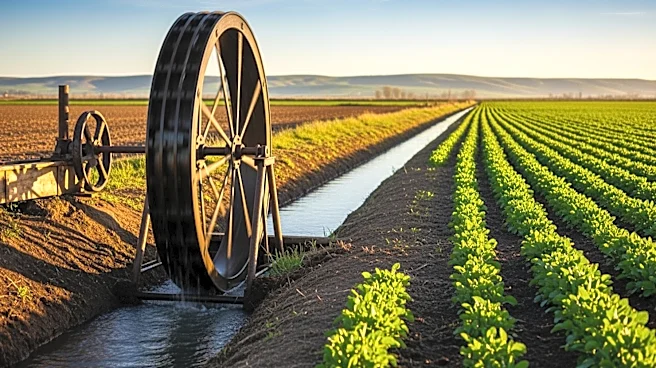
in promoting farming by distributing seeds and advocating for agricultural development. The establishment of Greeley, Colorado, in the 1870s marked a turning point, as it became the state's first major agricultural settlement. The widespread adoption of irrigation transformed the region, allowing crops to thrive and turning Colorado into a leader in irrigated agriculture by 1900.
Why It's Important?
The historical development of irrigation in Colorado underscores the importance of innovation and adaptation in overcoming environmental challenges. This transformation not only ensured the survival of early settlers but also laid the foundation for Colorado's agricultural success. The state's leadership in irrigated agriculture highlights the potential for similar strategies to be applied in other arid regions facing agricultural challenges. Understanding this history can inform current and future agricultural practices, emphasizing the need for sustainable water management and technological advancements.
Beyond the Headlines
The story of Colorado's agricultural development reflects broader themes of resilience and ingenuity in the face of adversity. It illustrates how human intervention and technological innovation can reshape environments and economies. The legacy of early irrigation efforts continues to influence modern farming practices, highlighting the ongoing relevance of water management in agriculture. This historical perspective can inspire contemporary efforts to address climate change and resource scarcity through innovative solutions.