



What's Happening?
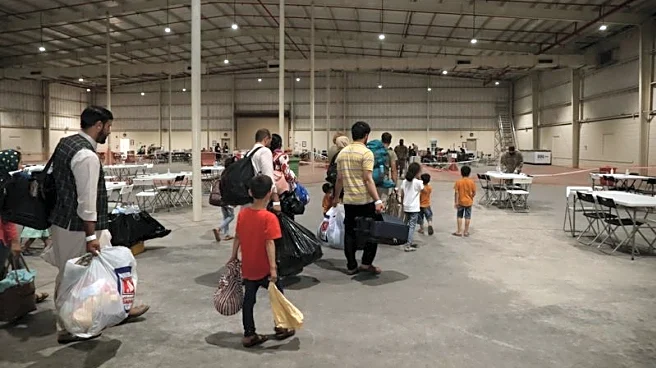
The United Nations has issued a warning regarding the massive return of Afghan migrants from Pakistan and Iran, which is pushing Afghanistan to the brink of a humanitarian crisis. Since October 2023, approximately 5.4 million Afghans have returned to their
home country, primarily from these neighboring nations. This influx is largely due to crackdowns on undocumented migrants by both Pakistan and Iran, which have led to forced expulsions. Many of these returnees were born in Pakistan and had established lives and businesses there. The UNHCR's Afghanistan representative, Arafat Jamal, highlighted the unprecedented scale and speed of these returns, noting that last year alone saw 2.9 million people return to Afghanistan. The Taliban government has criticized these mass expulsions, which have exacerbated the country's existing struggles with a weak economy, severe drought, and recent earthquakes.
Why It's Important?
The return of millions of Afghans is placing immense pressure on Afghanistan's already strained resources. The country is grappling with a dire humanitarian situation, compounded by a poor human rights record, particularly concerning women and girls. The influx of returnees, amounting to 12% of the population, is forcing many families to resort to negative coping mechanisms such as skipping meals, incurring debt, or selling belongings to survive. The UN has expressed deep concern about the sustainability of these returns, as many returnees are unable to rebuild viable lives in Afghanistan. This situation could lead to further instability in the region, affecting international relations and humanitarian efforts.
What's Next?
Afghan authorities are providing care packages to returnees, including food aid, cash, SIM cards, and transportation assistance. However, the sustainability of these efforts is uncertain, as resources are limited. The UN has noted that while some returnees plan to leave Afghanistan again, others are determined to stay despite the challenges. The international community may need to increase support to Afghanistan to prevent further humanitarian crises and ensure the stability of the region. Continued monitoring and assistance from global organizations will be crucial in addressing the needs of the returnees and the broader Afghan population.
Beyond the Headlines
The mass return of Afghan migrants highlights broader issues of migration and displacement in the region. The forced expulsions by Pakistan and Iran raise ethical and legal questions about the treatment of migrants and the responsibilities of host countries. Additionally, the situation underscores the need for comprehensive international policies to address migration and support countries facing large-scale returns. Long-term solutions will require collaboration between Afghanistan, neighboring countries, and international organizations to ensure the rights and well-being of migrants and returnees.