




What's Happening?
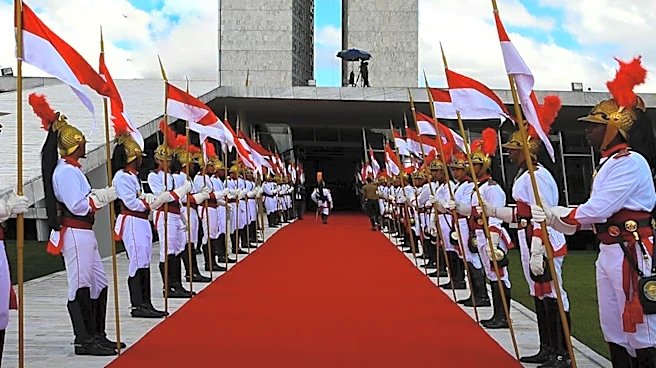
The Hawaii Army National Guard held a change of command ceremony in Kapolei, Hawaii, on November 14, 2026. During the ceremony, Brig. Gen. Ronald D. Hogsten officially assumed command of the Hawaii Army National Guard. This event marked the formal transfer
of leadership from the outgoing commander, Brig. Gen. Tyson Y. Tahara, to Brig. Gen. Hogsten. The ceremony included traditional military protocols, with Brig. Gen. Hogsten addressing the formation of soldiers at its conclusion. The event was documented by the U.S. Army National Guard, with photographs capturing the proceedings, including Brig. Gen. Hogsten speaking to the troops. This leadership transition is a standard procedure within military organizations, ensuring continuity and the formal transfer of responsibilities and authority.
Why It's Important?
The change of command within the Hawaii Army National Guard is significant for several reasons. It represents a shift in leadership that will influence the strategic direction, operational readiness, and overall morale of the Guard units in Hawaii. Brig. Gen. Hogsten's assumption of command means he will now be responsible for leading the state's National Guard forces, which play a crucial role in both federal and state missions. These missions include responding to domestic emergencies, providing support for civil authorities, and deploying in support of national defense objectives. The leadership transition ensures that the Hawaii Army National Guard remains prepared to fulfill its dual mandate of serving the state and the nation, impacting its effectiveness in disaster response, community support, and military operations.
What's Next?
Following the change of command, Brig. Gen. Ronald D. Hogsten will assume full responsibilities as the new commander of the Hawaii Army National Guard. His immediate focus will likely involve assessing current operations, familiarizing himself with ongoing initiatives, and setting strategic priorities for the Guard. This transition will involve working closely with his staff and subordinate commanders to ensure a smooth continuation of all missions and programs. Stakeholders, including state government officials, federal military commands, and local communities, will observe the new leadership's direction, particularly concerning disaster preparedness, community engagement, and training exercises. The new command will also likely review personnel policies and resource allocation to optimize the Guard's capabilities.
Beyond the Headlines
The change of command in the Hawaii Army National Guard extends beyond a simple leadership transition; it reflects the ongoing evolution of military leadership and its impact on state and national security. The selection of Brig. Gen. Hogsten signifies a trust in his leadership capabilities to navigate the complex challenges facing modern National Guard units, which often include balancing federal deployment requirements with state-level emergency response needs. This transition also highlights the continuous cycle of leadership development within the U.S. military, where experienced officers are entrusted with greater responsibilities. The effectiveness of this new command will be crucial for Hawaii's resilience in the face of natural disasters and its contribution to broader national defense strategies, underscoring the critical role of the National Guard in the nation's security framework.