

What's Happening?
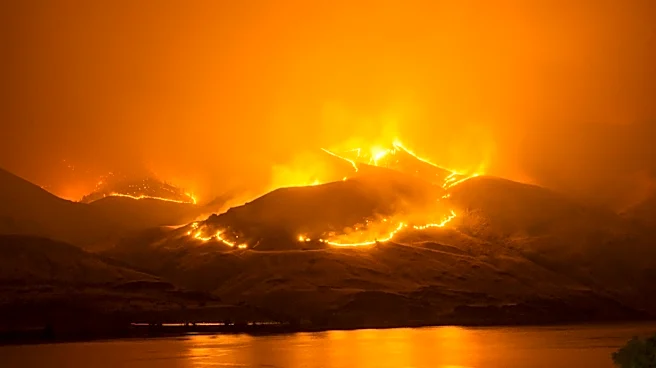
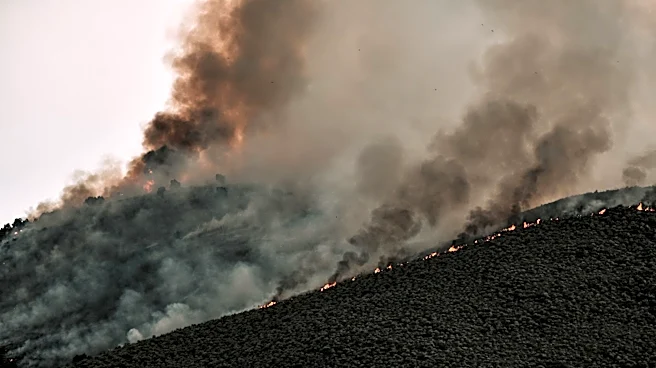
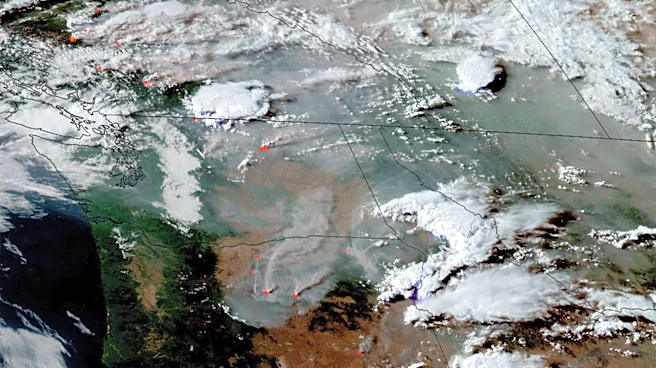
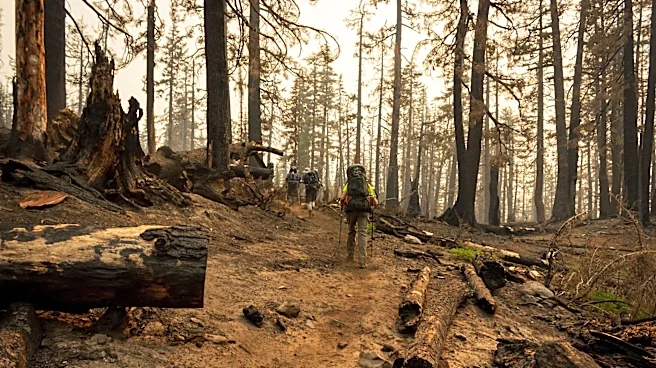
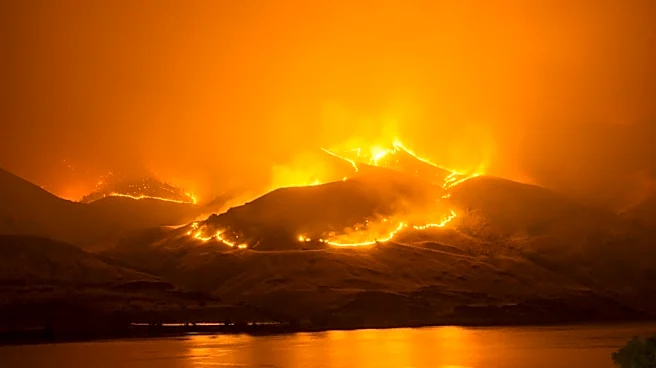
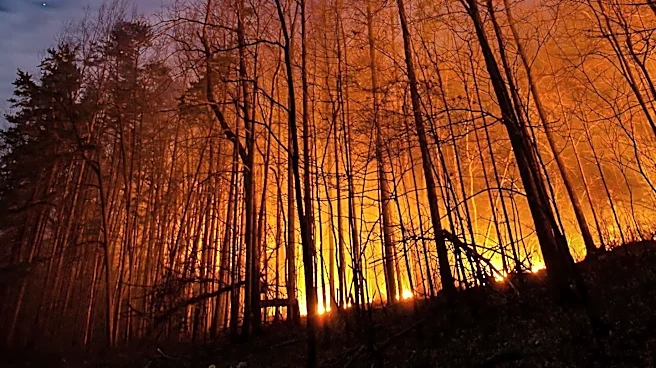
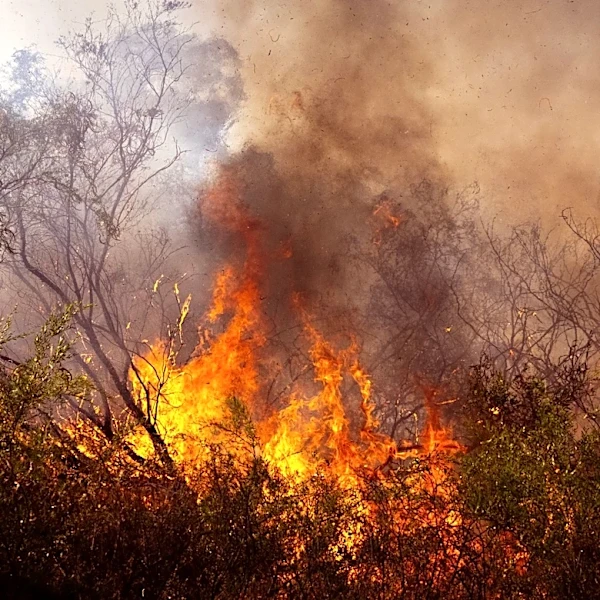
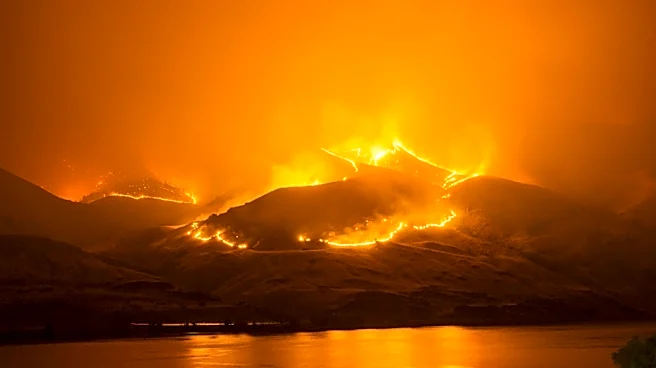
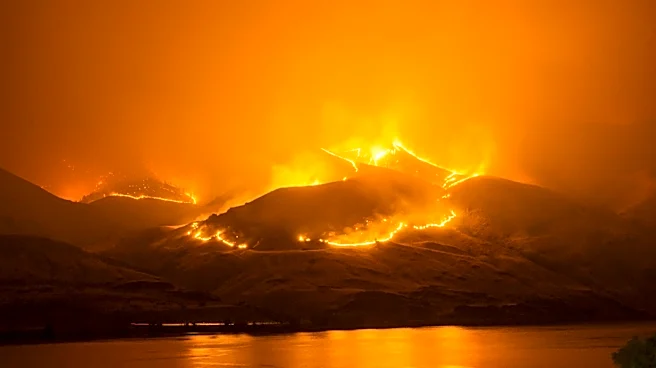
Oregon and Washington are experiencing their worst wildfire season since at least 2000, with over 2 million acres burned. The fires have led to multiple evacuations and unhealthy air quality across the region. Significant fires include the Bench Fire,
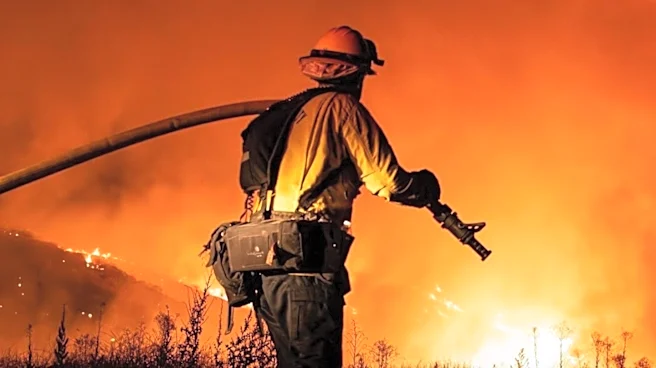
which has destroyed eight homes on the Warm Springs reservation, and the Akawa Butte Fire, which is only 19% contained. Firefighters are working to contain the blazes, but challenging conditions persist. The National Weather Service has issued a Fire Weather Watch due to expected gusty winds, which could exacerbate the situation.
Why It's Important?
The severity of this wildfire season poses significant risks to communities, ecosystems, and air quality in the Pacific Northwest. The destruction of homes and displacement of residents highlight the urgent need for effective fire management and prevention strategies. The economic impact on local communities, including potential losses in tourism and agriculture, could be substantial. Additionally, the fires underscore the broader challenges of climate change and the increasing frequency of extreme weather events.
What's Next?
Firefighting efforts will continue as crews work to contain the fires and protect communities. Authorities are likely to implement additional evacuation orders if conditions worsen. The situation calls for coordinated efforts between state and federal agencies to manage resources and support affected communities. Long-term, there may be increased focus on developing strategies to mitigate the impact of future wildfire seasons, including improved land management and climate adaptation measures.