







What's Happening?
IVI RMA North America, a fertility services provider, has rebranded as Everleap Fertility, uniting nine fertility practice brands under one name. The company operates over 65 clinics and 26 IVF laboratories across the U.S. This rebranding coincides with
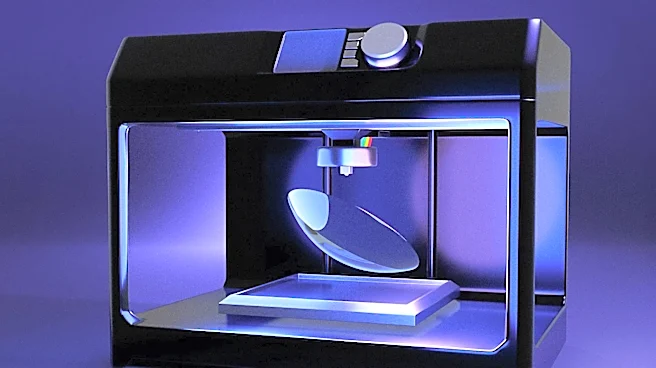
the release of the inaugural IVI Institute Fertility Barometer, which found that 21% of U.S. women, or 14.3 million, have experienced infertility. Everleap Fertility has also announced new initiatives, including partnerships with Costco and the cash-pay health care platform Sesame to make fertility treatment more accessible and affordable. Additionally, the company is partnering with TMRW Life Sciences to bring the first fully automated embryology lab from Conceivable Life Sciences to the U.S. in 2027 and has launched an AI-powered clinical assistant to help clinicians analyze patient data and streamline documentation for personalized fertility care. CEO Lynn Mason emphasized the company's commitment to advancing standards and providing personalized treatment.
Why It's Important?
The rebranding of IVI RMA North America to Everleap Fertility and its strategic partnerships signify a significant effort to address the growing issue of infertility in the U.S. The collaboration with Costco and Sesame is particularly impactful, as it aims to reduce financial barriers to fertility treatments, which are often a major deterrent for individuals and couples. By making fertility care more accessible and affordable, Everleap Fertility could significantly increase the number of people who can pursue treatment. The introduction of an AI-powered clinical assistant and the future automated embryology lab highlight a move towards integrating advanced technology into fertility care, potentially improving success rates and efficiency. This development could lead to a broader societal impact by helping more individuals achieve their family-building goals, while also influencing the healthcare industry to adopt more innovative and patient-centric approaches to complex medical services.
What's Next?
Everleap Fertility will continue to integrate its nine practice brands under the new unified identity, focusing on standardizing care across its extensive network of clinics and laboratories. The partnerships with Costco and Sesame are expected to roll out, making fertility treatment options more widely available and potentially more affordable for a larger segment of the U.S. population. The company will also proceed with the development and implementation of its AI-powered clinical assistant, aiming to enhance personalized care and operational efficiency. Looking further ahead, the planned introduction of the first fully automated embryology lab in 2027, in partnership with TMRW Life Sciences, suggests a future where advanced technology plays an even more central role in fertility treatment, potentially setting new benchmarks for the industry in the U.S. These initiatives are likely to be closely watched by other healthcare providers and could influence future trends in specialized medical care.
Beyond the Headlines
The initiatives by Everleap Fertility extend beyond immediate treatment access, touching upon deeper societal and ethical considerations. The finding that 21% of U.S. women have experienced infertility underscores a widespread public health challenge that often carries significant emotional and financial burdens. By actively working to reduce the cost and complexity of fertility treatments through partnerships with platforms like Sesame, Everleap Fertility is not only expanding access but also challenging the traditional, often prohibitive, cost structures within specialized medical fields. The integration of AI and automation in embryology raises questions about the future of human-assisted reproduction, potentially leading to more standardized and successful outcomes, but also prompting discussions about the role of technology in such sensitive areas. This shift could normalize fertility treatments, making them a more integrated part of reproductive health discussions and reducing the stigma often associated with infertility.