







What's Happening?
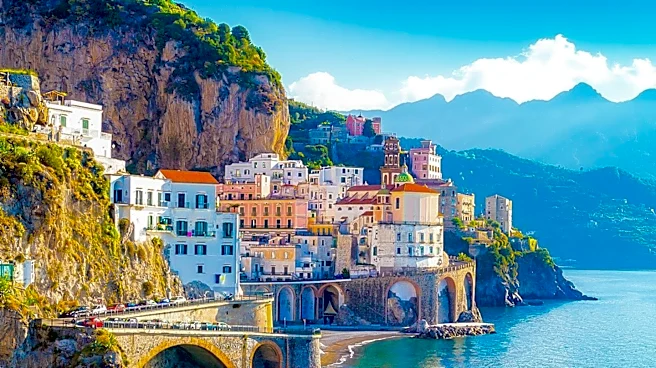
The village of Ravello on Italy's Amalfi Coast is facing tensions due to a recent ban on vehicles heavier than five tons, following a tragic accident where a tourist bus plunged into a ravine, killing the driver. This measure, aimed at addressing safety
concerns and overtourism, has sparked discontent among residents who rely on tourism for their livelihoods. The ban has been criticized by local authorities, including Ravello's mayor, who argue that it restricts mobility and could severely impact the local economy. The region has been grappling with overtourism, with similar measures being implemented in other Italian tourist hotspots like Venice and Rome.
Why It's Important?
The situation in Ravello highlights the broader challenges of managing overtourism, a growing issue in popular destinations worldwide. The ban on heavy vehicles is a response to safety concerns but also reflects the need to balance tourist influx with the preservation of local infrastructure and community well-being. For U.S. stakeholders, this serves as a cautionary tale about the potential economic and social impacts of overtourism, emphasizing the importance of sustainable tourism practices. The outcome in Ravello could influence how other tourist-dependent regions, including those in the U.S., approach similar challenges.
What's Next?
Local authorities in Ravello are advocating for alternative solutions, such as road repairs and speed limit enforcement, to address safety concerns without hindering tourism. The ongoing debate may lead to further discussions on sustainable tourism strategies, potentially involving stakeholders from the tourism industry, government, and local communities. The resolution of this issue could set a precedent for other regions facing overtourism, influencing policy decisions and tourism management practices globally.