



What's Happening?
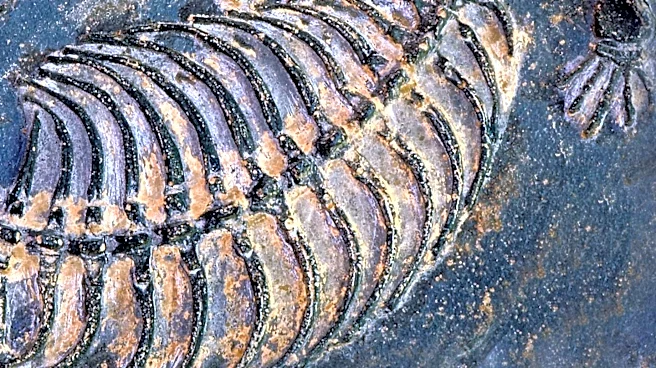
Global experts have made significant fossil discoveries in central China's Hunan province, collecting over 50,000 fossil specimens. This extensive collection has led to the identification of 153 animal species, with nearly 60% of these species being new
to science. The findings contribute to the understanding of the Cambrian period, a crucial time in Earth's history characterized by a rapid diversification of life forms, often referred to as the 'Cambrian Explosion.' While the specific details of these new species are not provided, the sheer volume and novelty of the discoveries highlight the rich paleontological potential of the region and the ongoing efforts to uncover ancient life. These efforts are part of a broader scientific endeavor to piece together the evolutionary history of animals and the conditions that led to the emergence of complex life.
Why It's Important?
This discovery is important for several reasons. Firstly, the identification of 153 animal species, with a majority being new, significantly expands the known biodiversity of the Cambrian period. This provides paleontologists and evolutionary biologists with a richer dataset to study the 'Cambrian Explosion,' a pivotal event approximately 540 million years ago when most major animal phyla appeared. Understanding these new species can offer fresh insights into early animal evolution, the development of complex body plans, and the ecological dynamics of ancient marine environments. Secondly, the sheer number of specimens collected—over 50,000—suggests a remarkably well-preserved fossil site, which could yield further discoveries and more complete specimens, allowing for detailed anatomical and phylogenetic analyses. Such findings can challenge or confirm existing theories about evolutionary pathways and the timing of key evolutionary innovations, ultimately refining our understanding of life's origins and diversification on Earth.
What's Next?
The immediate next steps will likely involve detailed scientific analysis and classification of the newly identified species. Researchers will work to describe these organisms, determine their phylogenetic relationships, and assess their ecological roles within the Cambrian ecosystem. This process will involve extensive laboratory work, including microscopic examination, comparative anatomy, and potentially geochemical analysis of the surrounding rock to understand the environmental context. Further expeditions to the Hunan site are also probable, given the success of this initial collection, to uncover more specimens and potentially new species. The findings will undoubtedly be published in scientific journals, contributing to the global paleontological discourse and potentially leading to new hypotheses about the Cambrian Explosion and early animal evolution. Public exhibitions and educational materials may also be developed to share these discoveries with a broader audience.
Beyond the Headlines
Beyond the immediate scientific implications, these discoveries contribute to a deeper philosophical understanding of life's origins and complexity. The Cambrian Explosion remains a subject of intense scientific debate, with various theories attempting to explain the rapid appearance of diverse animal forms. New fossil evidence, especially from previously underexplored regions like Hunan, can provide critical data to support or refute these theories. Ethically, the careful excavation and preservation of such ancient biological heritage underscore the importance of responsible scientific practice and international collaboration in paleontology. Culturally, these findings can inspire public interest in science, evolution, and the natural world, fostering a greater appreciation for Earth's deep history and the intricate processes that have shaped life over millions of years. The ongoing unraveling of the Cambrian mystery continues to highlight the dynamic and ever-evolving nature of scientific knowledge.