



What's Happening?
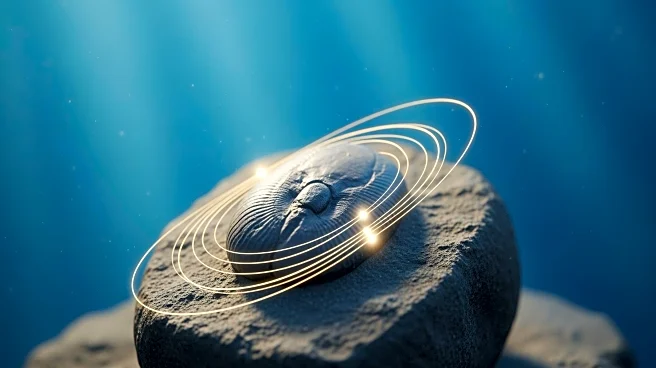
Researchers have discovered 97-million-year-old magnetic fossils that suggest an extinct marine animal may have used Earth's magnetic field for navigation. The study, conducted by scientists from the University of Cambridge and Helmholtz-Zentrum Berlin,
identified large magnetofossils with magnetic properties indicating a multicellular marine animal capable of magnetoreception. Advanced imaging techniques, including magnetic tomography, were used to visualize the internal magnetic configuration of the fossils. The findings suggest that these ancient creatures might have been among the first to develop GPS-like navigation systems, a trait seen in modern species like birds and sea turtles.
Why It's Important?
This discovery provides new insights into the evolutionary history of magnetoreception, a sensory ability that allows organisms to navigate using Earth's magnetic field. Understanding how this trait evolved in ancient marine animals can shed light on the development of complex navigation systems in modern species. The research highlights the sophistication of ancient life forms and their adaptation to environmental challenges. It also opens new avenues for studying the evolutionary biology of sensory systems, potentially influencing fields such as biomimetics and robotics.