


What's Happening?
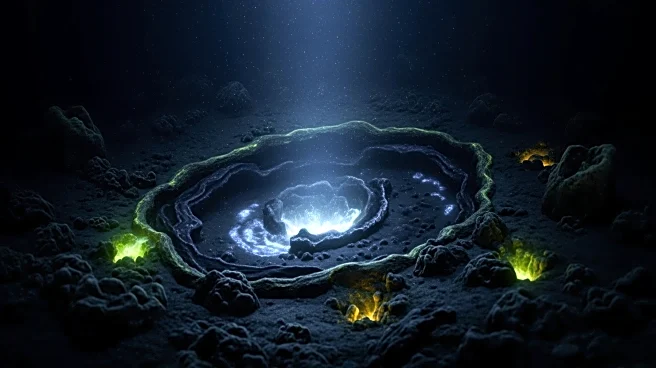
Scientists from the Institute of Deep-sea Science and Engineering/Chinese Academy of Sciences have uncovered a deep-sea ecosystem that thrives in the absence of sunlight. This discovery was made during a submersible dive into a deep ocean trench between
Russia and Alaska. The ecosystem, located in the hadal zone at depths of 5,800 to 9,500 meters, includes various species of clams and tube worms. These organisms rely on methane, produced by microbes in the sediments, for survival through a process called chemosynthesis. This finding highlights the adaptability of life in extreme environments and expands our understanding of deep-sea ecosystems.
Why It's Important?
The discovery of this deep-sea ecosystem is significant as it challenges existing knowledge about the limits of life on Earth. It demonstrates that life can thrive in extreme conditions without sunlight, relying instead on chemical energy sources like methane. This has implications for understanding the potential for life in similar extreme environments on other planets. Additionally, the study of such ecosystems can provide insights into the resilience and adaptability of life, which is crucial for understanding biodiversity and the impacts of environmental changes on marine life.
What's Next?
Further research is likely to focus on exploring other deep-sea environments to identify similar ecosystems and understand their ecological roles. Scientists may also investigate the genetic and biochemical adaptations that enable these organisms to survive in such extreme conditions. This could lead to discoveries with potential applications in biotechnology and medicine. Additionally, the findings may prompt discussions on the conservation of deep-sea environments, which are increasingly threatened by human activities such as deep-sea mining and climate change.
Beyond the Headlines
The discovery raises questions about the ethical implications of exploiting deep-sea resources. As interest in deep-sea mining grows, understanding the ecological significance of these ecosystems becomes crucial. The potential disruption of these habitats could have unforeseen consequences on global biodiversity and marine health. This discovery also highlights the need for international cooperation in the management and protection of deep-sea environments, ensuring that scientific exploration and resource extraction are balanced with conservation efforts.