
What's Happening?
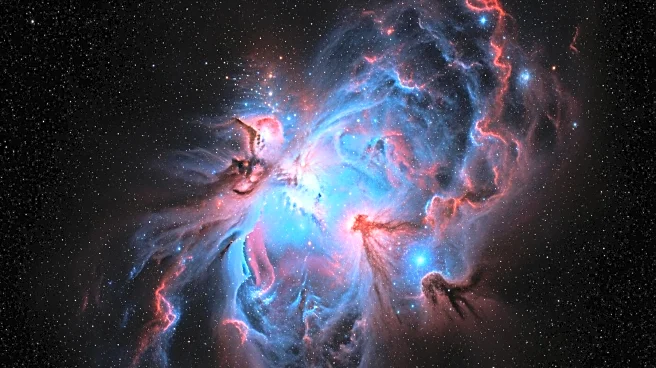
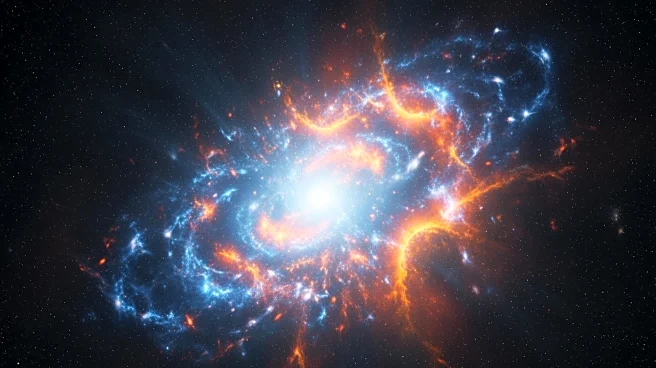
The Hubble Space Telescope has revisited the Crab Nebula, capturing detailed images that highlight its filamentary structure and track its expansion over 25 years. Located 6,500 light-years away in the constellation Taurus, the nebula continues to evolve
since the supernova that created it nearly a millennium ago. The new images, taken in 2024, reveal significant outward movement of the nebula's filaments at a pace of 5.5 million kilometers per hour. These observations provide new insights into the nebula's 3D structure and ongoing transformation. Compared to Hubble's 1999 images, the 2024 images show changes in the temperature, density, and chemical composition of the nebula's gases, allowing astronomers to study how supernova remnants change over time.
Why It's Important?
The Hubble Space Telescope's observations of the Crab Nebula are significant for several reasons. They offer a rare opportunity to study the dynamics of a supernova remnant over an extended period. This research enhances our understanding of the life cycle of stars and the processes that occur after a supernova explosion. The findings could have broader implications for astrophysics, particularly in understanding the mechanisms of stellar evolution and the distribution of elements in the universe. The ability to track changes in the nebula's structure and composition over time also underscores the importance of long-term observational projects in space science.
What's Next?
Future observations of the Crab Nebula and similar supernova remnants will likely continue to provide valuable data for astronomers. As technology advances, new instruments may offer even more detailed insights into these cosmic phenomena. The ongoing study of the Crab Nebula could lead to a deeper understanding of the physical processes driving its expansion and transformation. Additionally, these findings may inform the development of theoretical models that predict the behavior of other supernova remnants, contributing to a more comprehensive understanding of the universe.
Beyond the Headlines
The Hubble Space Telescope's long-term observations highlight the importance of sustained scientific inquiry and the value of maintaining and upgrading space-based observatories. The ability to revisit and reanalyze celestial objects over decades allows scientists to observe changes that would otherwise go unnoticed. This approach not only enriches our knowledge of specific astronomical phenomena but also enhances our overall understanding of the cosmos. The Crab Nebula's ongoing study serves as a testament to the enduring legacy of the Hubble Space Telescope and its contributions to space science.