






What's Happening?
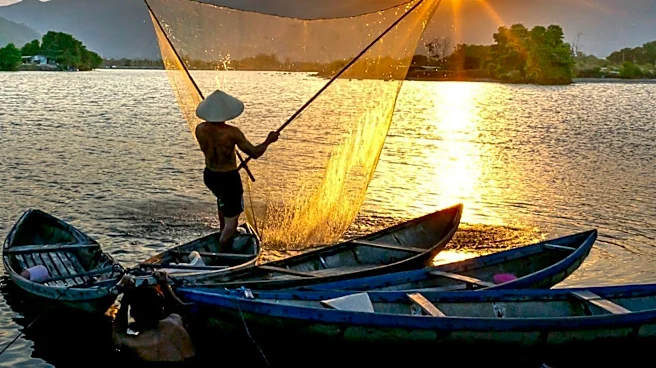
Eco-tourism projects are successfully converting individuals previously engaged in environmentally harmful activities, such as fishing and poaching, into conservationists. Project Hiu, founded by filmmaker Madison Stewart in Indonesia, employs local fishermen
and their boats for tourist activities like snorkeling with sharks and sailing tours. These fishermen, numbering around 80 and operating 15 boats, also contribute to shark tagging and research, including the world-first tagging of 10 tiger sharks in Indonesian waters. Similarly, Isla Mujeres in Mexico has become a hub for eco-friendly tourism, offering accommodations and activities that promote conservation. These initiatives aim to address the root causes of environmental conflicts by providing alternative, sustainable livelihoods and repurposing the skills of those who once relied on exploiting wildlife.
Why It's Important?
These eco-tourism models are crucial for sustainable development and conservation efforts globally. By offering alternative economic opportunities, they directly tackle the financial pressures that often drive individuals to engage in poaching, illegal logging, or overfishing. This approach fosters a sense of ownership and responsibility among local communities for their natural resources, transforming them from potential adversaries to active partners in conservation. The success of projects like Project Hiu demonstrates that economic incentives can align with environmental protection, leading to tangible benefits such as increased wildlife populations and improved community well-being. This shift not only protects endangered species and ecosystems but also creates a more stable and equitable economic future for local populations.
What's Next?
The success of these initiatives suggests a potential for broader adoption and scaling of similar eco-tourism models. Continued investment in training, infrastructure, and marketing for these projects will be essential to expand their reach and impact. Further research into the long-term ecological and socio-economic benefits will help refine these models and encourage their replication in other vulnerable regions. Additionally, collaboration between conservation organizations, local governments, and the tourism industry will be vital to create supportive policy frameworks and ensure the sustainability of these alternative livelihoods. The focus will likely remain on empowering local communities and integrating their traditional knowledge into modern conservation strategies.
Beyond the Headlines
The deeper implication of these eco-tourism projects lies in their ability to reframe the narrative around conservation. Instead of viewing local communities as obstacles to environmental protection, these initiatives highlight their potential as key stakeholders and agents of change. This approach challenges traditional top-down conservation methods by emphasizing collaboration and mutual benefit. It also underscores the ethical dimension of conservation, recognizing that poverty and lack of alternatives often drive harmful practices. By providing dignified and sustainable work, eco-tourism not only protects nature but also promotes social justice and economic empowerment, fostering a more holistic and effective path towards global environmental stewardship.