
What's Happening?
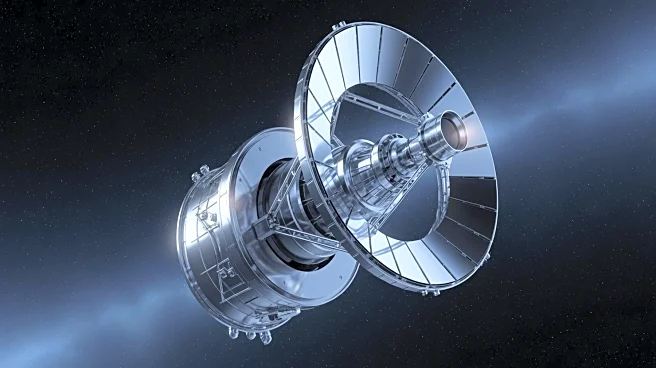
NASA has announced the completion of the Nancy Grace Roman Space Telescope, marking a significant milestone in space astronomy. The telescope, assembled at NASA's Goddard Space Flight Center, is set to launch
by May 2027, with potential for an earlier launch in fall 2026. The Roman Space Telescope aims to map the universe, probe dark energy, conduct exoplanet surveys, and produce high-quality images to study galaxy evolution and stellar populations. Additionally, NASA is addressing concerns over satellite megaconstellations, which could impact space telescopes like Roman and Hubble. A study warns that satellite streaks could contaminate images, prompting discussions on international coordination and software solutions to mitigate the issue.
Why It's Important?
The completion of the Roman Space Telescope is crucial for advancing our understanding of the universe. It will play a key role in exploring dark energy and conducting extensive exoplanet surveys, potentially leading to groundbreaking discoveries in astrophysics. The telescope's capabilities will enhance NASA's ability to study galaxy evolution and dark matter. However, the threat posed by satellite megaconstellations highlights the need for global cooperation to protect space-based astronomy. The potential contamination of telescope images by satellite streaks could hinder scientific progress, emphasizing the importance of developing strategies to minimize light pollution from satellites.
What's Next?
NASA plans to conduct final tests and readiness reviews for the Roman Space Telescope, aiming for a launch by May 2027. The agency is also engaging in discussions to address the impact of satellite megaconstellations on space telescopes. Potential solutions include tighter international coordination on satellite brightness and orbital altitudes, as well as software pipelines to detect and remove satellite trails from images. These efforts are critical to ensuring the success of future space missions and preserving the integrity of astronomical observations.
Beyond the Headlines
The development of the Roman Space Telescope and the challenges posed by satellite megaconstellations reflect broader issues in space exploration and international policy. The need for collaboration among nations and private operators to manage satellite deployments underscores the complexity of modern space endeavors. As space becomes increasingly crowded, balancing technological advancement with the preservation of scientific research environments will be essential. The Roman Space Telescope's mission could drive innovations in satellite management and international space policy, setting precedents for future astronomical projects.