


What's Happening?
A commentary from the Carnegie Russia Eurasia Center indicates that the Kremlin can no longer postpone difficult economic decisions due to the escalating costs of the war in Ukraine. Since the 2022 invasion, the Russian government has attempted to shield
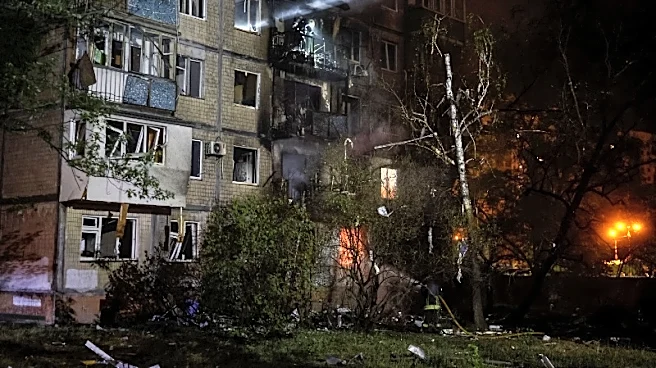
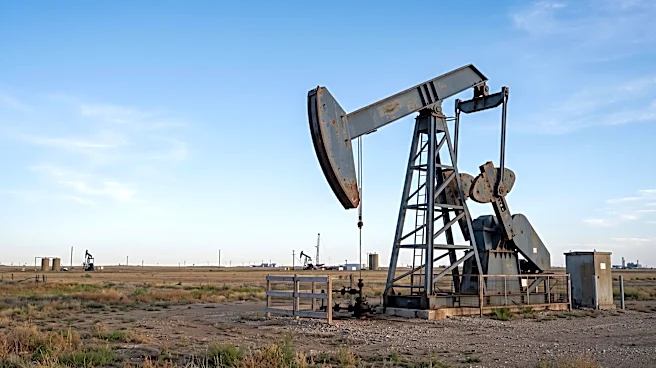
ordinary citizens from the financial burden, primarily by taxing large businesses and depleting financial reserves. However, this model is now faltering, with the state struggling to support businesses affected by Ukrainian drone attacks and facing gasoline shortages. Businesses are increasingly forced to fund their own air defenses and repairs. The commentary suggests that the regime, which previously claimed the war's cost was manageable, is now requiring contributions from millions of Russians, leading to potential political consequences as financial reserves dwindle and the tax base shrinks.
Why It's Important?
This analysis is significant for understanding the long-term economic stability of Russia and its implications for global geopolitics. The Kremlin's inability to sustain its current economic model suggests a growing internal strain that could impact its military capabilities and foreign policy decisions. For the U.S. and its allies, this indicates that sanctions and military aid to Ukraine are having a tangible effect on Russia's economy. A weakening Russian economy could lead to increased internal dissent, a shift in military strategy, or a more aggressive stance to secure resources. Conversely, it could also force the Kremlin to consider de-escalation or diplomatic solutions. The economic challenges highlight the complex interplay between military conflict, domestic policy, and international relations, with potential ripple effects on global energy markets and supply chains.
What's Next?
The Kremlin faces a critical choice: either transition to a full-fledged war economy with increased repression and resource reallocation, or acknowledge that it cannot simultaneously fund the war at current levels and maintain 'normal' economic life. The former would entail finding new income sources or accepting prolonged economic stagnation, both carrying political risks. The latter would require scaling back military operations, revising spending priorities, or pursuing diplomatic steps towards a ceasefire. Signs of financial repression, such as forcing banks to buy government debt or steering public savings into state-controlled funds, would indicate a move towards austerity. Conversely, a clear shift to a full war economy would be immediately evident. These decisions will shape Russia's future trajectory and its interactions with the international community.
Beyond the Headlines
The economic pressures on the Kremlin, as detailed by the Carnegie Russia Eurasia Center, reveal a deeper systemic crisis where the state is increasingly abandoning its own rules due to unsustainable demands. This includes the Finance Ministry taking on more debt than legally allowed and the use of drone strikes as a pretext for asset redistribution, effectively blurring the lines of property rights. The reported push to consolidate pension money into a state-controlled fund signifies financial repression, not reform, as the state seeks captive capital. These actions indicate a fundamental shift in governance, where expediency and war funding override established legal and economic norms. The long-term implications include a potential erosion of trust in state institutions, increased social unrest, and a more unpredictable and authoritarian political landscape within Russia, with significant consequences for its citizens and its role on the global stage.