







What's Happening?
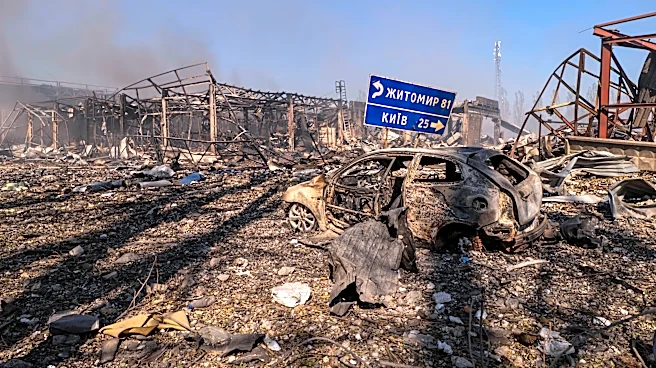
Residents in Poland's Lublin Voivodeship received an alert on the afternoon of August 30, warning them of a massive Russian aerial attack targeting western Ukraine. The initial message, sent at 15:07, stated: 'ATTENTION! ATTENTION! ATTENTION! A massive aerial attack is
ongoing on the territory of western Ukraine. Follow updates.' However, just six minutes later, at 15:13, a follow-up message was issued, canceling the previous alert. The second notification clarified: 'ATTENTION! ATTENTION! ATTENTION! The massive attack on the territory of western Ukraine has concluded. There is no threat on the territory of the Republic of Poland. Follow updates.' This incident follows a previous event on July 30, when a Russian missile entered Polish airspace and landed on Polish territory during a large-scale attack on Ukraine, prompting a debate about the effectiveness and timing of public alerts. Deputy Defence Minister Magdalena Sobkowiak-Czarnecka had previously stated in mid-August that SMS warnings for dangerous situations would be implemented.
Why It's Important?
This incident highlights the direct and immediate impact of the ongoing conflict in Ukraine on neighboring NATO member states like Poland. The issuance and rapid recall of the alert underscore the heightened state of vigilance and the challenges of real-time threat assessment in a volatile geopolitical environment. For Polish residents, such warnings, even if quickly retracted, can cause significant anxiety and disrupt daily life, demonstrating the psychological toll of proximity to conflict. From a security perspective, the incident emphasizes the need for robust and agile early warning systems, as well as clear communication protocols, to manage potential spillover effects of the war. The previous incident of a Russian missile entering Polish airspace further illustrates the tangible risks and the imperative for NATO countries to maintain strong air defense capabilities and coordinated responses to protect their sovereignty and civilian populations.
What's Next?
Following this incident, Polish authorities will likely review their alert systems and communication procedures to ensure accuracy and minimize public confusion. The rapid cancellation of the warning suggests that intelligence or threat assessments were updated quickly, but the initial alert still caused concern. There may be further discussions within the Polish government and with NATO allies regarding the protocols for issuing and retracting such warnings, especially concerning cross-border incidents. The ongoing Russian drone attacks on Ukraine mean that similar situations could arise, necessitating continuous refinement of these systems. The incident also serves as a reminder of the persistent threat posed by the conflict to regional security, prompting continued vigilance and potentially further enhancements to air defense and early warning capabilities in Poland and other frontline NATO states.
Beyond the Headlines
The brief but impactful alert in Poland reveals the 'fog of war' extending beyond active combat zones, creating a constant state of readiness and uncertainty in neighboring countries. This incident is not merely about a technical alert system; it reflects the broader psychological and strategic challenges faced by nations bordering a major conflict. The need for rapid decision-making under pressure, coupled with the potential for misinformation or rapidly evolving intelligence, creates a complex operational environment. Ethically, authorities must balance the imperative to inform the public of potential dangers with the risk of causing undue panic. The incident also subtly underscores the interconnectedness of European security, where events in one nation can immediately trigger responses and concerns in another, reinforcing the collective defense principles of alliances like NATO. It highlights how the conflict in Ukraine is reshaping civilian preparedness and national security doctrines across the continent.