

What's Happening?
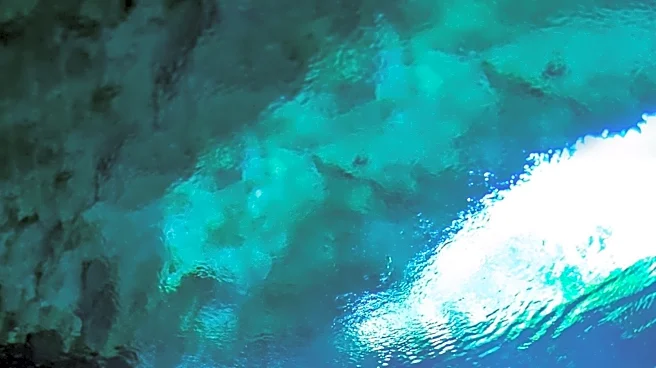
Cave divers from the Instituto USAH have successfully connected the O'Ho Tucha cave system to Sac Actun, a vast flooded cave network located beneath the jungle around Tulum, Mexico. This discovery adds approximately two kilometers of newly mapped underwater
passages to the already extensive system. The institute announced the connection on November 6, 2026, providing a map of the explored sectors. The divers accessed the system through Aktun Kalom Kin, a recently located cenote, navigating through narrow underwater tunnels. This connection was achieved in two stages, first linking O'Ho Tucha to the eastern sector of Aktun Kalom Kin, and then pushing through its western side to connect with a section of Sac Actun. The new passages extend southwest, towards Tulum. This expansion provisionally brings the combined length of Sac Actun, including O'Ho Tucha and the new passages, to about 387.5 kilometers, though this total awaits official confirmation.
Why It's Important?
The connection of O'Ho Tucha to the Sac Actun cave system is significant for several reasons, particularly in the context of scientific research and environmental understanding. For U.S. scientific communities, especially those involved in speleology, hydrology, and geology, this discovery provides new data for studying the Yucatán aquifer, a critical freshwater source for the region. The expanded mapping of these underwater passages can offer insights into ancient climate patterns, unique ecosystems, and the geological history of the area. This research can contribute to broader understanding of karst systems globally. Furthermore, the discovery underscores the importance of conservation efforts for these fragile underground environments, which are increasingly threatened by human development and climate change. For U.S. environmental organizations, it highlights the need for international collaboration in protecting these unique natural wonders and their associated biodiversity.
What's Next?
Following the announcement, the next steps involve the official confirmation and detailed surveying of the newly connected passages. The Instituto USAH and other research bodies will likely continue exploration efforts, as other large cave systems in the area remain separate in exploration records despite their proximity. This ongoing work could lead to further connections and an even more comprehensive understanding of the Yucatán's subterranean landscape. The new data will support future geological and hydrological studies, which are crucial for managing the region's water resources. While the announcement does not indicate whether Aktun Kalom Kin will be open to visitors, the discovery could potentially attract more scientific expeditions and specialized cave divers from the U.S. and around the world, further cementing the region's importance as a hub for cave exploration and research.
Beyond the Headlines
The continuous expansion of the Sac Actun cave system through discoveries like the O'Ho Tucha connection highlights the profound and often hidden natural wonders beneath the Earth's surface. Beyond scientific implications, these discoveries carry significant cultural and historical weight, as such cave systems often contain archaeological artifacts and evidence of ancient civilizations, particularly the Maya. For U.S. archaeologists and anthropologists, these newly accessible passages could offer unprecedented opportunities to uncover more about pre-Columbian societies and their relationship with these sacred underground worlds. Ethically, the exploration and mapping of these delicate environments raise questions about responsible access, preservation, and the potential impact of human activity. The long-term implications include the need for robust conservation policies and international cooperation to protect these unique geological and ecological treasures from degradation, ensuring their scientific and cultural value for future generations.