




What's Happening?
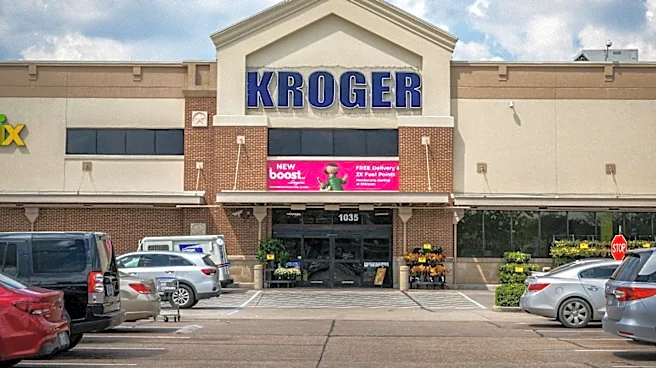
The National Labor Relations Board (NLRB) has determined that two Kroger subsidiaries, Fred Meyer Stores and Quality Food Centers (QFC), violated federal labor law. The violation occurred when the companies prohibited unionized employees from wearing
Black Lives Matter (BLM) buttons and face masks without first engaging in collective bargaining with their union. A three-member panel affirmed an administrative law judge’s finding that the companies unlawfully altered employees’ working conditions in the summer of 2020. Employees in Washington state were barred from displaying BLM messages, and some were sent home for refusing to remove the insignia. The NLRB concluded that the companies violated Sections 8(a)(5) and 8(a)(1) of the National Labor Relations Act (NLRA), which prohibit employers from refusing to bargain collectively and interfering with employees’ protected labor rights. The board did not rule on whether the BLM displays independently constituted protected concerted activity, focusing instead on the failure to bargain.
Why It's Important?
This ruling is significant for unionized employers across the U.S. as it underscores the importance of bargaining obligations, even when existing company policies appear to permit stricter enforcement of dress codes. The decision highlights that long-standing workplace practices, such as allowing employees to personalize uniforms with various buttons, can establish a precedent that requires negotiation before changes are implemented. For employees, it reinforces their protected labor rights, particularly concerning changes to working conditions. The ruling also has implications for how companies manage employee expression on social and political issues within the workplace, especially when such expressions become part of a broader movement. Companies that fail to bargain over changes to dress codes or employee expression policies, especially when employees face financial consequences for non-compliance, risk legal challenges and penalties from the NLRB. This case specifically involved union-issued buttons that included both BLM messaging and the union's name, further intertwining the issue with protected union activity.
What's Next?
The NLRB has ordered both Fred Meyer Stores and Quality Food Centers to rescind the unlawful changes to their dress code policies. Additionally, the subsidiaries are required to compensate affected employees for lost wages and other financial harms resulting from the ban. This includes addressing potential tax consequences related to back-pay awards and removing any references to these incidents from employee records. For other unionized employers, this decision serves as a clear directive that any substantial changes to established workplace practices, including those related to employee expression or dress codes, must be preceded by notification and bargaining with employee union representatives. The ruling may prompt a review of existing dress code policies and bargaining agreements across various industries to ensure compliance with NLRA provisions and avoid similar violations.
Beyond the Headlines
This case delves into the complex intersection of employee rights, corporate policy, and social movements. While the NLRB focused on the bargaining aspect rather than the protected nature of BLM displays, the underlying context of the George Floyd protests and the broader conversation around racial justice in the workplace is undeniable. The decision implicitly acknowledges the evolving nature of 'working conditions' to include aspects of employee expression, particularly when such expression is tied to collective activity or union representation. It also highlights the tension between an employer's right to maintain a certain workplace environment and an employee's right to express views, especially when those views are perceived as promoting a workplace free from discrimination. The ruling could encourage unions to push for clearer contractual language regarding employee expression and may lead to more proactive engagement from employers on these sensitive topics to avoid legal disputes.