








What's Happening?
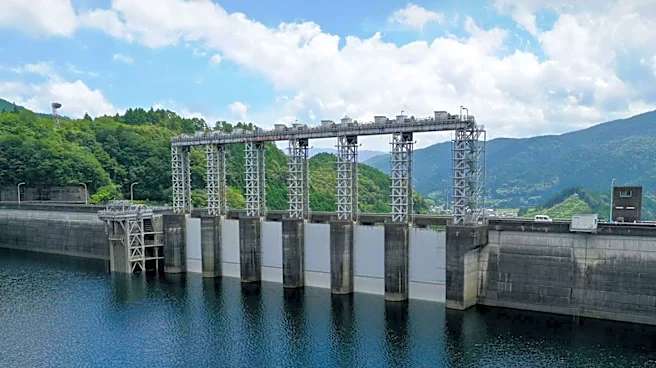
Egyptian Prime Minister Mostafa Madbouly, representing President Abdel Fattah El-Sisi, attended the inauguration of the Julius Nyerere Dam and hydropower plant in Tanzania. This $2.9 billion project, built by an Egyptian consortium comprising Arab Contractors
and Elsewedy Electric over five years, is located on the Rufiji River. The dam is designed to have a generation capacity of 2,115 megawatts from nine giant water turbines, each with a capacity of 235 megawatts. It also includes a 400-kilovolt switchyard for integrating power into the Tanzanian national grid. The project aims to meet Tanzania’s energy needs, regulate water flows, and reduce flood risks. Madbouly emphasized that the project reflects the strong will of the Tanzanian people and extensive Egyptian expertise, reinforcing shared political awareness and cooperation between the two countries and across the African continent.
Why It's Important?
The inauguration of the Julius Nyerere Dam signifies a major milestone in African development cooperation and highlights Egypt's growing role in supporting infrastructure projects across the continent. This project is crucial for Tanzania's energy security and economic development, as it will significantly increase its power generation capacity and reduce reliance on other energy sources. For Egypt, the successful completion of such a large-scale project by an Egyptian consortium demonstrates the capabilities of its companies internationally, particularly in Africa. It also serves to counter previous claims that Egypt opposes development in Nile Basin countries, asserting Cairo's support for regional development that does not harm downstream nations. The dam's ability to regulate water flows and mitigate floods will have significant environmental and social benefits for the region, improving agricultural productivity and protecting communities.
What's Next?
Following the inauguration, the Julius Nyerere Dam will begin its operational service, contributing significantly to Tanzania's national electricity grid. The focus will shift to optimizing its power generation and water management capabilities to maximize its benefits for the Tanzanian people. Egypt and Tanzania are expected to explore further avenues for bilateral cooperation, particularly in economic sectors such as trade and investment, building on the momentum generated by this successful project. The Egyptian Prime Minister reiterated Cairo's readiness to continue partnership with Tanzania and other African nations to foster sustainable development. This project could also pave the way for more Egyptian companies to undertake large-scale infrastructure projects across Africa, strengthening regional economic ties and technical collaboration.
Beyond the Headlines
The Julius Nyerere Dam project carries deeper implications beyond its immediate economic and energy benefits. It symbolizes a narrative of South-South cooperation, where African nations collaborate to achieve development goals, reducing reliance on external powers. The project's success challenges the perception of African countries as solely recipients of aid, showcasing their capacity for large-scale engineering and project management. Furthermore, the dam's role in water regulation in the Rufiji River basin highlights the critical importance of water resource management in Africa, a continent frequently affected by water scarcity and climate change. The project also has cultural significance, named after Tanzania's first president, Julius Nyerere, reinforcing national identity and aspirations for self-sufficiency. This collaboration could foster greater political and economic integration within Africa, promoting a shared vision for sustainable development and regional stability.