



What's Happening?
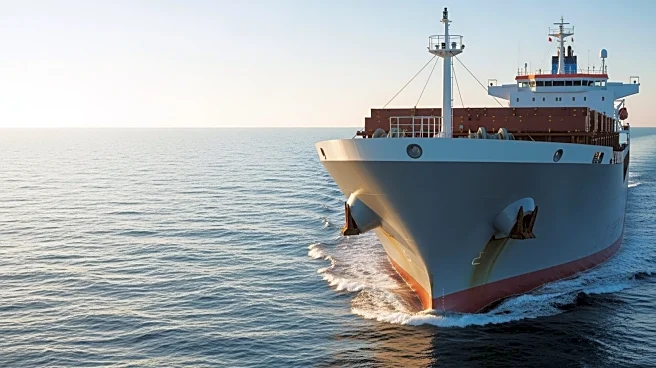
Danish shipping company Maersk has announced that its vessel, the Maersk Denver, successfully navigated the Red Sea and Bab el-Mandeb Strait on January 11-12, 2026. This marks a significant development as it is the second time in recent weeks that Maersk has tested
this route following a ceasefire in Gaza. The company had previously rerouted its vessels around Africa's Cape of Good Hope due to security concerns stemming from attacks by Yemen's Houthi rebels in the Red Sea. The current navigation through the Red Sea is part of Maersk's cautious approach to gradually resume its East-West corridor operations via the Suez Canal. Despite this progress, Maersk has not yet committed to a full reopening of the route, maintaining a stepwise approach to ensure security thresholds are met.
Why It's Important?
The resumption of navigation through the Red Sea by Maersk is a critical step towards normalizing international shipping lanes that have been disrupted for nearly two years. The Suez Canal is a vital maritime route, offering the fastest connection between Asia and Europe. The previous rerouting around the Cape of Good Hope significantly increased transit times and freight rates, impacting global trade. A return to the Suez Canal could alleviate these pressures, potentially reducing shipping costs and improving supply chain efficiency. However, the situation remains tentative, as Maersk and other shipping companies continue to monitor security conditions closely. The broader shipping industry stands to benefit from a stable and secure Red Sea route, which could lead to a reduction in ship demand by up to 10%, according to industry analysts.
What's Next?
Maersk's cautious approach suggests that further assessments of security conditions will dictate the pace of resuming full operations through the Suez Canal. Other shipping companies, such as CMA CGM, are also planning limited passages through the canal, indicating a collective industry interest in re-establishing this critical route. The continuation of the Gaza ceasefire will be a key factor in determining the stability of the region and the safety of maritime operations. Stakeholders in the shipping industry will likely continue to advocate for diplomatic efforts to maintain peace and security in the region, which is essential for the long-term viability of the Suez Canal as a major shipping corridor.