

What's Happening?
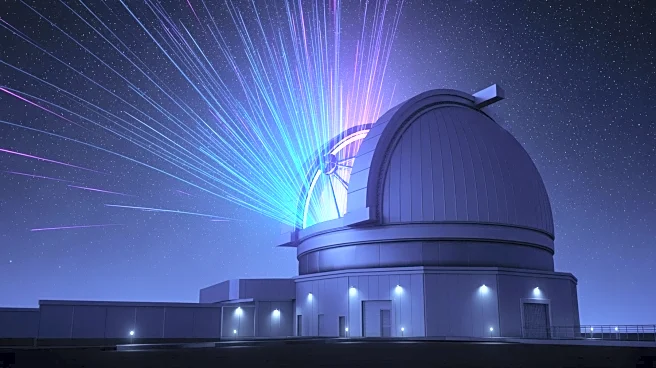
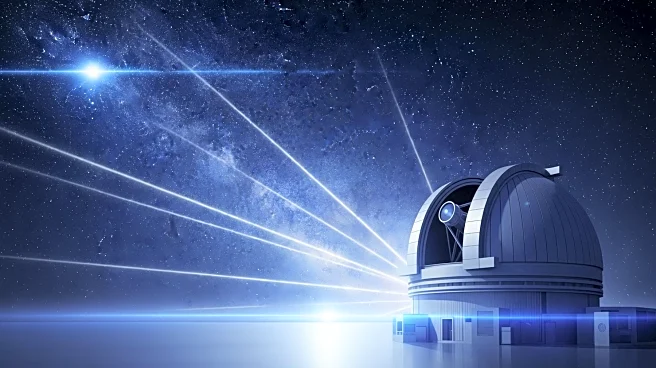
The Vera C. Rubin Observatory in Chile has achieved a significant milestone by issuing 800,000 astronomy alerts in a single night. This achievement marks the beginning of its operations, with expectations to increase to 7 million alerts nightly. The observatory's
alerts direct scientists to new asteroids, supernovae, and other cosmic changes, enabling rapid follow-up observations. This capability is part of the observatory's upcoming 10-year Legacy Survey of Space and Time (LSST), which aims to capture both rapid and long-term changes in the night sky, providing unprecedented data for astronomical research.
Why It's Important?
The Rubin Observatory's ability to detect and alert scientists to cosmic phenomena in real-time represents a revolutionary advancement in astronomy. This capability allows for immediate follow-up observations, enhancing the study of transient events like supernovae and the tracking of potentially hazardous asteroids. The data collected will contribute to understanding fundamental cosmic mysteries, such as dark matter and dark energy. The observatory's operations will significantly expand the scope of astronomical research, providing insights into the dynamic processes of the universe and potentially leading to groundbreaking discoveries.
What's Next?
As the Rubin Observatory continues its operations, it will begin the LSST program, which will generate comprehensive images of the Southern Hemisphere sky. This program will produce vast amounts of data, requiring advanced processing and analysis techniques. The observatory's findings will likely lead to new research initiatives and collaborations among scientists worldwide. The data will also support the development of new models and theories in astrophysics, potentially reshaping our understanding of the universe. Continued advancements in technology and data management will be crucial to maximizing the observatory's impact.