
What's Happening?
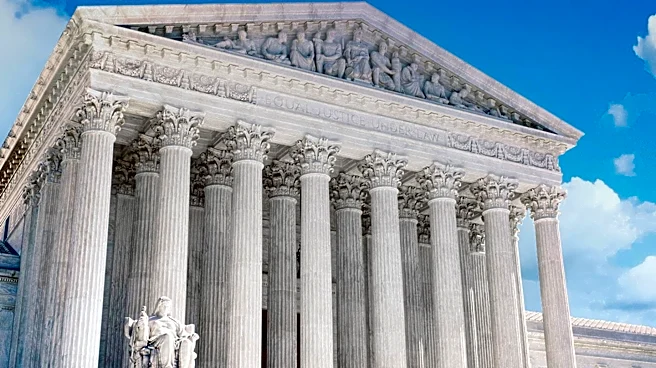
The United States Supreme Court has blocked President Trump's attempt to remove Federal Reserve Governor Lisa Cook. In a 5-4 decision, the high court rejected President Trump's bid to fire Cook, who was
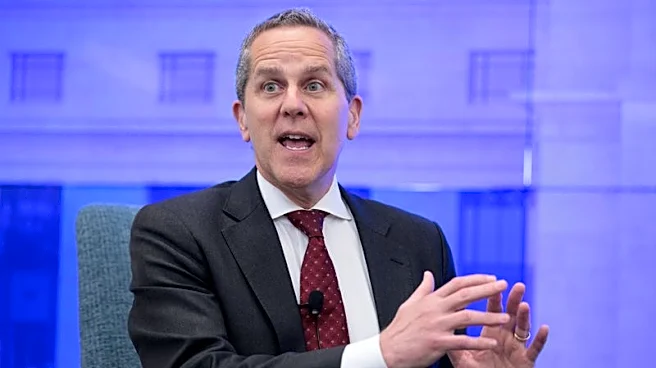
appointed by President Biden, amidst unproven allegations of mortgage fraud. This ruling prevents President Trump from becoming the first president to remove a Fed official since the central bank's creation in 1913. Chief Justice John Roberts, joined by conservative Justice Brett Kavanaugh and the court's three liberal justices, formed the majority. Justices Clarence Thomas, Samuel Alito, Neil Gorsuch, and Amy Coney Barrett dissented. The court's decision emphasized that such protection from removal is contrary to the separation of powers enshrined in the Constitution. Governor Cook praised the decision, stating it helps maintain the central bank's independence and freedom from political interference, asserting that the allegations were a manufactured pretext to influence monetary policy.
Why It's Important?
This Supreme Court decision is significant for upholding the independence of the Federal Reserve, a critical institution for the U.S. economy. By preventing the President from unilaterally removing a Fed governor, the ruling reinforces the central bank's ability to make monetary policy decisions free from direct political pressure. This independence is crucial for maintaining stability and confidence in financial markets, as it allows the Fed to set interest rates and manage the money supply based on economic data rather than political expediency. The decision also clarifies the separation of powers, affirming that certain executive branch officials, particularly those in independent agencies, are not subject to the President's 'at-will' removal. This protects the integrity of institutions designed to operate with a degree of autonomy to serve long-term national interests, rather than short-term political agendas. The outcome ensures that the Federal Reserve can continue its mandate of maximizing employment and maintaining price stability without undue interference.
What's Next?
Following this Supreme Court ruling, Federal Reserve Governor Lisa Cook will continue her term, which was scheduled to run until 2038. The decision sets a precedent that reinforces the job security of Federal Reserve governors, potentially insulating them from future attempts at politically motivated removals. This could lead to greater stability within the Federal Reserve's leadership and its monetary policy decisions. The ruling may also influence future presidential appointments to independent agencies, as presidents will be aware of the limitations on their ability to remove such officials. Political leaders and civil society groups are likely to react to this decision, with some supporting the reinforcement of institutional independence and others potentially expressing concerns about presidential authority. The focus will now shift back to the Federal Reserve's ongoing work in managing the U.S. economy, including setting interest rates and addressing inflation, with its independence reaffirmed by the highest court.
Beyond the Headlines
The Supreme Court's decision delves into the fundamental principles of the U.S. constitutional structure, particularly the separation of powers and the concept of an independent executive branch. While the President holds significant executive authority, this ruling underscores that certain agencies, like the Federal Reserve, are designed to operate with a degree of insulation from direct presidential control to prevent politicization of critical functions. This has broader implications for the governance of other independent agencies and commissions, potentially strengthening their autonomy. The case highlights the ongoing tension between presidential power and institutional independence, a recurring theme in American governance. Ethically, the decision supports the idea that expert-driven policy-making, particularly in complex economic matters, should be shielded from partisan pressures. It also reaffirms the judiciary's role in interpreting and upholding constitutional boundaries, even when it involves disputes between the executive and other branches or independent bodies.