


What's Happening?
Representative Dave Min has been reelected to California's 47th Congressional District, securing his second term in the House. His reelection is highlighted by organizations like CalBike, which endorsed his state Senate campaign in 2020 due to his strong
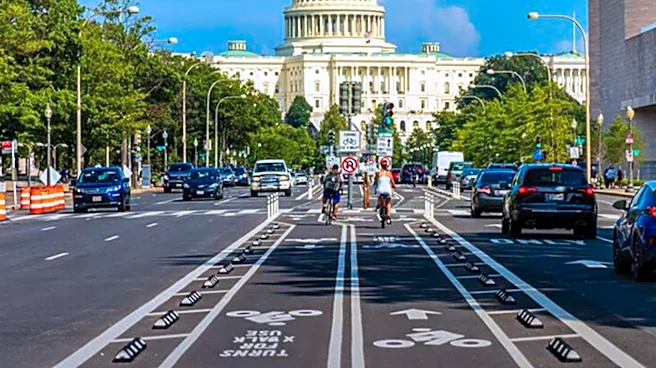
support for low-stress bikeway networks and Complete Streets. Min's platform has consistently connected better mobility options, such as bicycling, to broader issues like climate change, affordability, and community safety. His continued presence in Congress is seen as a win for advocates pushing for more sustainable and accessible transportation infrastructure. This victory is part of a larger trend in California where voters are electing leaders who prioritize active transportation as a solution to everyday challenges faced by residents.
Why It's Important?
The reelection of Representative Dave Min signifies a continued legislative focus on active transportation and urban planning that prioritizes cyclists and pedestrians. His support for initiatives like low-stress bikeway networks and Complete Streets can lead to increased federal funding and policy support for similar projects nationwide. This is crucial for urban and suburban areas looking to reduce reliance on automobiles, decrease carbon emissions, and improve public health through increased physical activity. For residents, it means potentially safer routes for commuting, recreation, and school travel, which can also alleviate traffic congestion and reduce household transportation costs. Min's continued advocacy reinforces the idea that bicycling infrastructure is not just a niche interest but a vital component of modern, sustainable community development.
What's Next?
With Representative Min's reelection, it is anticipated that he will continue to champion legislation and secure funding for projects that enhance bicycling infrastructure and promote active transportation. This could include advocating for federal grants for bike lane construction, supporting policies that integrate cycling into broader transportation planning, and pushing for environmental initiatives that align with sustainable transit. His work will likely influence how federal transportation budgets are allocated, potentially directing more resources towards non-vehicular transit options. Stakeholders, including bicycling advocacy groups and urban planners, will likely collaborate with Min's office to advance these goals, aiming to expand safe and accessible cycling networks across California and potentially serve as a model for other states.
Beyond the Headlines
Representative Min's reelection reflects a growing societal shift towards valuing sustainable and active modes of transportation. Beyond the immediate policy implications, this trend suggests a deeper cultural change where communities are increasingly seeking alternatives to car-centric urban design. This movement has ethical dimensions, as it promotes equitable access to transportation for all residents, regardless of car ownership, and addresses environmental justice by reducing pollution in urban areas. Long-term, such legislative support could lead to a significant transformation in urban landscapes, fostering healthier, more connected communities and potentially influencing real estate development patterns to favor walkable and bikeable neighborhoods. It also highlights the evolving role of local and federal government in shaping public health and environmental outcomes through infrastructure investment.