


What's Happening?
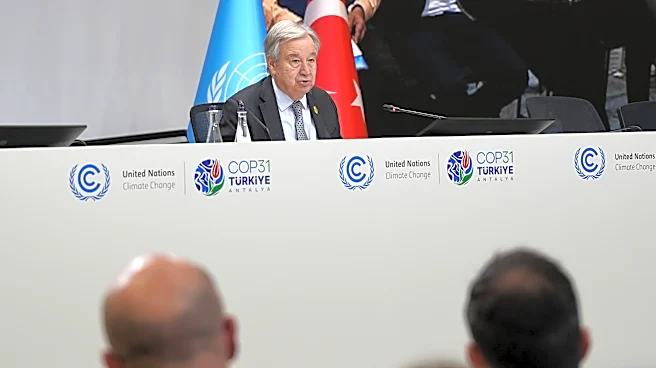
At COP31 in Antalya, Africa has made some progress in climate finance but has also encountered significant setbacks, particularly concerning adaptation finance. African negotiators, along with other developing countries, successfully secured a formal
place for the Climate Finance Work Programme (CFWP) on the official agenda. This program is crucial for scrutinizing developed nations' legal obligations under Article 9.1 of the Paris Agreement to provide public and concessional climate finance. However, Africa's bid to create a dedicated, standalone agenda item for tripling adaptation finance did not succeed due to opposition from wealthy nations. While parties agreed at COP30 to triple adaptation finance by 2035, critical details such as scope, baseline, delivery timelines, and accountability mechanisms remain unresolved. The Leaf Coalition also announced that Ghana would be the first country to access finance for a carbon credit project, providing millions of dollars for forest protection, though this initiative has drawn criticism from climate activists as a 'false climate solution' and 'greenwashing.'
Why It's Important?
The mixed outcomes for Africa at COP31 highlight the ongoing challenges in achieving equitable climate action and finance. The inclusion of the CFWP on the agenda is a significant win, as it provides a platform for African nations to press for financial accountability from developed countries, particularly regarding the $300 billion annual climate finance goal by 2035. This is vital because African countries lose an average of 2% to 5% of their GDP annually due to climate extremes and spend up to 9% of their budgets on unplanned disaster relief. However, the failure to secure a dedicated agenda item for adaptation finance is a major blow, as it leaves critical questions about its implementation unanswered. Without clear mechanisms, the commitment to triple adaptation finance risks becoming an unfulfilled political promise, leaving vulnerable African communities exposed to the escalating impacts of climate change. The debate over carbon credits also underscores the complexities and controversies surrounding market-based climate solutions.
What's Next?
Africa is now pushing for adaptation finance to be discussed under the Global Goal on Adaptation (GGA) to ensure that finance drives clear implementation, addresses growing adaptation needs, strengthens climate resilience, and improves access to funding. The operational details of the Belém Action Mechanism (BAM), a global climate mechanism established to guide a just transition for workers and communities, are also expected to be agreed upon at COP31. However, the latest draft negotiating text on BAM suggests that wealthy nations prefer the UN climate secretariat and external institutions to take responsibility, which Africa views as potentially leading to another bureaucratic process. The outcomes of these discussions will significantly influence Africa's ability to adapt to climate change and transition to a low-carbon economy. The ongoing debate over carbon credits will also continue, with activists scrutinizing their effectiveness and potential for greenwashing.
Beyond the Headlines
The negotiations at COP31 reveal a persistent tension between the urgent needs of developing nations, particularly in Africa, and the financial commitments of developed countries. The struggle over adaptation finance highlights the disproportionate impact of climate change on vulnerable regions that have contributed least to the problem. The criticism of carbon credit projects as 'greenwashing' points to a broader debate about the integrity and effectiveness of market-based mechanisms in achieving genuine decarbonization. This ethical dimension questions whether such solutions truly address the root causes of climate change or merely allow high-emitting companies to continue polluting. The push for a 'just transition' through mechanisms like BAM also underscores the social and economic equity considerations that must accompany climate action, ensuring that the shift to a low-carbon economy does not leave communities and workers behind. Ultimately, the success of COP31 and future climate summits will depend on bridging these divides and fostering a more equitable and effective global response to climate change.