



What's Happening?
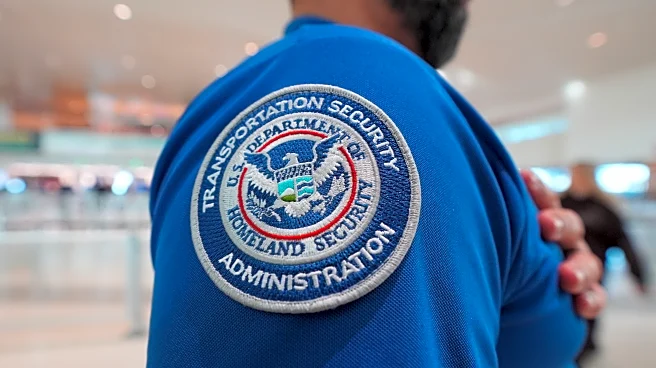
Transportation Security Administration (TSA) officers across the United States missed their first full paycheck as a result of a prolonged Department of Homeland Security (DHS) shutdown. This situation arises from a political deadlock over DHS funding,
which has compelled essential TSA staff to work without pay. The funding lapse has placed significant financial strain on these workers and threatens to disrupt airport operations during the busy spring travel season. The shutdown has led to increased unscheduled absences and the departure of over 300 TSA officers, exacerbating concerns about longer wait times and potential flight delays. Efforts are underway at various airports to support unpaid workers through food and essentials drives. The Senate has failed multiple times to pass a funding measure, with negotiations stalling over immigration enforcement provisions.
Why It's Important?
The ongoing shutdown and lack of pay for TSA officers highlight the broader implications of political gridlock on essential services. TSA officers, who are crucial for maintaining airport security, are facing financial hardships, which could lead to increased attrition and operational challenges at airports. This situation underscores the vulnerability of essential workers during government shutdowns and the potential impact on the travel industry and economy. The inability to resolve funding issues not only affects TSA employees but also travelers and the broader economy, as longer wait times and potential delays could deter travel and affect related industries.
What's Next?
Without a resolution to the DHS funding impasse, TSA officers will continue to work without pay, potentially leading to further staffing shortages and operational disruptions at airports. The Senate may consider additional measures if there is progress on immigration enforcement provisions or an agreement to fund non-enforcement DHS components separately. However, continued political stalemate could prolong the pay freeze for TSA employees, increasing the likelihood of further attrition and operational challenges.