





What's Happening?
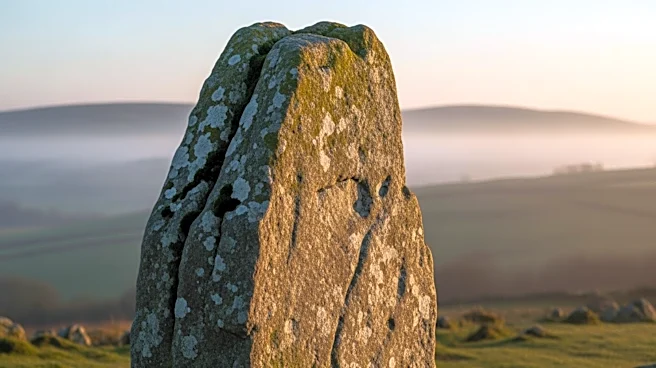
New research from Curtin University has detailed the likely transportation of Stonehenge's Altar Stone, a six-tonne sandstone megalith, from northeast Scotland to Salisbury Plain, a journey of approximately 700 kilometers. The study suggests that ancient
communities transported the stone through challenging terrain, rather than relying solely on glacial movement. This finding highlights the organizational capabilities of Neolithic societies and their understanding of the landscape, as they likely combined overland hauling with river or coastal transport.
Why It's Important?
The study provides new insights into the construction of Stonehenge, emphasizing the human effort and ingenuity involved in transporting massive stones over long distances. This challenges previous assumptions about the role of natural processes in moving the stones and underscores the complexity of Neolithic engineering and social organization. Understanding these ancient practices enriches our knowledge of prehistoric societies and their cultural achievements, offering a deeper appreciation of Stonehenge as a monumental human endeavor.
What's Next?
Future research aims to pinpoint the exact source of the Altar Stone in northeast Scotland and explore potential transport routes used by prehistoric communities. This ongoing investigation will further illuminate the methods and motivations behind the construction of Stonehenge, contributing to broader archaeological and historical studies of ancient Britain.